
Contents
Journal publication of the novel: parts 1–3. The numbering and paragraphs have been preserved from the source.
1
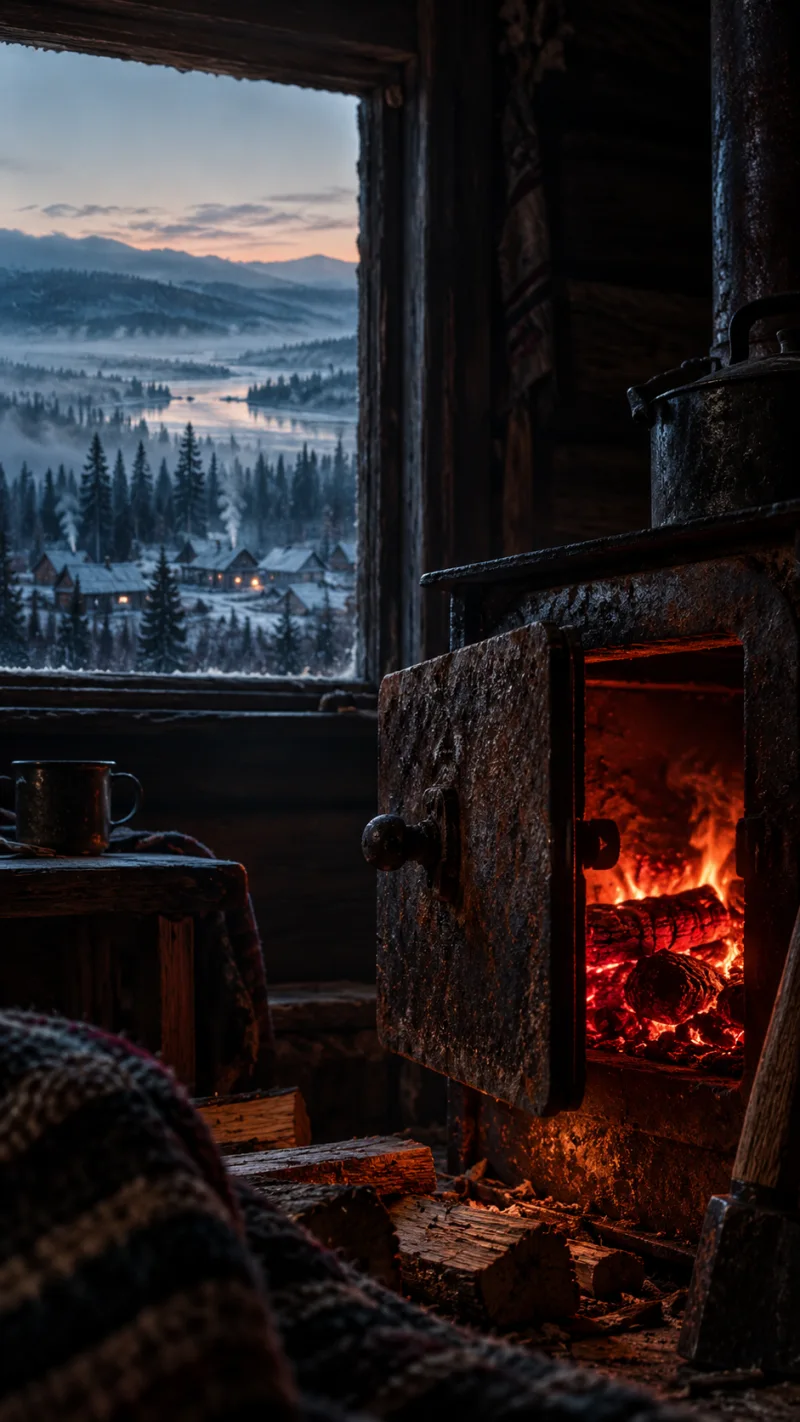
The taiga gripped the house with frost; all that remained was the square of the stove door, breathing crimson heat. The taiga rolled with the springtime clamour of streams, with the hubbub of birds. It splashed with the pink blossom of wild rosemary, burst through the windows in the swelling roar of the wind that rocked the shaggy crowns of the pines and piled up thunderclouds. They filled the dreams of the villagers of Namkhai with the rumble of a downpour born among the mountain ridges and tossing up countless streams in white-water manes.
“Our village of Namkhai stands firm and unshakeable,” its inhabitants thought. And indeed, the village seemed to have grown of its own accord on the banks of the swift and wilful Tashur River: houses had risen, grown yards and vegetable gardens around themselves, their deeply embedded roots drinking spring water from beneath the earth. The little village nestled against the conifer-clad flanks of the taiga hills, which rose ever higher as they receded, drinking in blue from the rocky summits of the range. The villagers fell asleep to the rumble of downpours, to the autumn cries of bird caravans heading south, to the furious onslaught of winds and blizzards, joined in their howling by wolf packs sweeping the snow along the outskirts with their grey tails, whipping up the dogs’ alarmed barking.
In distant times the Tashur River—which of course had no name of its own then—hurled itself from cliffs, heaved enormous stones, bulging the muscles of its current. The river had not even worn its present bed into the rock beneath it. And then people of the steppe came to its banks. They wandered in search of new lands, taking refuge from calamities, tormented by feuds.
Rocky cliffs and the impenetrable taiga were unfamiliar to those born in the freedom of the steppe. The frosts were savage, storms and icy winds came suddenly, the mosquito delirium drove you mad, and once the rains set in they went on endlessly. But a hunt always brought game, fish splashed in the riffles, and the forest’s gifts could be generous.
But the newcomers from the steppe soon understood: they were no masters here. Someone else’s guests, though. They found distinct trails, half-collapsed pit traps, the butchered skeletons of animals. In broad clearings the grass and undergrowth had been flattened by grazing domestic reindeer. Old fire sites showed black, brown circles had been pressed into the ground where dwellings had stood, and the dead were buried in trees, on platforms built high above the ground.
Though there were not so many traces to be found; much had grown over, much had vanished of its own accord. Well, perhaps there had been people here, but they had wandered off somewhere. The clansfolk had other things to worry about. They barely survived the winter: everything was different here, the country ill-suited to horses and cattle. Hunters went off into the wild forests, climbed steep passes. Yet they could not make themselves understood, tell one another who had been where, what was there. In which direction, how long did it take to get there? Nothing around them had been named.
Some of the clansfolk set out on a long journey: they had to find a suitable place to settle for a good while. They lost much strength wandering through the wilderness. Up ahead, taking turns, the hardiest hunters hacked through the dense thickets. Suddenly they heard a sharp, resonant sound… The forest thicket answered with a distant echo, fading far away. It was unexpected, everyone grew alarmed! Soon they emerged onto a treeless waste. A hunter, the first to have gone far ahead, was holding a drum. He was the one who had struck it, just then. What was this drum, why had he struck it?
A drum of tightly stretched, darkened reindeer hide, covered in drawings. On the reverse, if you turn back the edge, you can see that the hide was originally white. In the middle is drawn something like an arrow—but perhaps it is a fir tree with two branches. Above it some sort of bird—it looks like a bird’s skeleton with crookedly splayed wings. Below, on either side of the arrow-tree, two little people. Made of strokes, with circles for heads. Two large, half-curved fish encircle the drawing. Around the fish are incomprehensible signs, as though tiny birds had trampled there, leaving three-toed tracks. You can make out figures following one another around the edge. A horse, a deer, a boar, a snake, a mouse, a bull, a rooster, a dog…
“I went farther,” said the hunter, “there’s a pine there, it splits into three trunks. Up above is a platform made of poles, a burial place. Kites were circling over it, tearing at their prey. One kite snatched something away, grabbed it and flew off. I gave a sharp whistle, the way I call my steed on the steppe—and in its fright it dropped the drum.”
“It is a burial place, and there is a drum,” said an old and wise man of the steppe. “A shaman, then, buried with his shaman’s drum. A bad sign. The drum of a departed shaman. You should not have picked it up, let alone struck it… You will only call down misfortune!”
“Those were the laws on the steppe,” the hunter objected. “Here everything is different. We do not know what is around us, where we are. What unknown people were here? If we keep dragging the old steppe behind us, how will we make a home in a new place?”
Everyone thought the wise old man spoke truly. Yet the hunter had his own truth too. He had hacked his way ahead of them throughout the journey, carried so much baggage. All corded muscle, a keen eye, tireless in the hunt. He and his wife would leave offspring, carry on the line. Should they listen to an elder, respected but worn out by distant wanderings?
Everyone was tired; they dropped their bundles and collapsed, spent. A stream murmured below. They ought to fetch water and make a fire, boil some tea, eat some dried meat. No one could stir. Even their thoughts were tired, anxiety over the measureless forest tore at them with claws.
The hunter held the drum tightly, as though someone meant to take it from him. He poised himself, drew a deeper breath… And struck it with his palm! Struck it this way—and that. It was as though the surrounding mountains had come alive inside the drum, rolling waves of windfall-covered hills towards them. The drum’s voice was fearsome and rumbling; an echo answered, rolled away in cries. The clansfolk’s hearts grew lighter! As though someone were calling them, lost and frightened, to go forward without fear, climb the steep heights, see the unexplored lands from above.
The hunter found the rhythm, stamped his feet, swayed as though in a wind that he alone could feel. In the rolling blows on the stretched hide could be heard the whistle of arrows, the pounding of cavalry thousands strong over the hot drums of the steppes, the grinding of swords in battle and the cries of the dying, the deadly flight of a golden eagle, the howling of wolves in the frozen cosmos of the nights.
The steppe people lost their fear of the unknown; they took heart, found resolve. And the fire blazed, and they drank their fill of tea, and ate what they had. They began to climb towards the summits of the range, where white-headed elders smoke their pipes for ever, wrapping themselves in shaggy locks of mist.
In one spacious hollow they saw what were almost dark-blue carpets: they were bilberries. And they named the hollow—Bilberry Hollow. In another little valley there were many blueberries, everything shimmering bluish. It would be—Blueberry Valley. The next dell was covered in lingonberries: bright red and ripe. Lingonberry Dell, then. That was how they remembered everything.
As they were fording a turbulent river, a coiled snake was warming itself on a stone. A sign too, evidently. The river ran on, but now it was—Snake River. An eagle circled above a high pass. Above Eagle Pass, then. They went down, and there a lake spread out, a pine forest along its shores. Alert deer grazed in a clearing. In a clearing beside what was no longer simply a lake, but Deer Lake. And again they climbed; Boar Pass awaited them there: everything had been trampled with boar tracks. Through Red Deer Gorge, across Hare Stream and Wolf Windfall, they made their way to the rich Bear Forest.
At times the wilderness made them uneasy, the heavily overhanging cliffs that barred their way like sentries… Or they would begin arguing, quarrelling among themselves: should they go farther, and which was the right direction? Perhaps it would be better to stop, turn back?.. Then they struck the drum, its rhythm sounding in time with the beating of their hearts. Their fears retreated, flung away. The clansfolk stood in a circle, joined hands, passing strength and warmth to one another. They stamped and danced in time, filling with hope that there was no way they could turn back.
Now they knew where to gather bilberries, in which hollow. Where, before the mountain ridge they had named Nut Ridge, there were slopes with tall Siberian pines laden with cones. How to reach Snake River, come out at Deer Lake, catch fish. And a hunter could tell them: I was in such-and-such a place, there are good hunting grounds there!
It was no longer so frightening to go away for a long time; the wilds around them no longer scared them, they were almost like relatives, for they had names. And the free-ranging spirits of the steppe gradually found their bearings, settled into the new place. No, of course they did not become kin to the guardian spirits of the mountain-taiga country… But they began to live as neighbours, since that was how things were.
After some time the steppe people met copper-faced forest people. They seemed to materialize out of the taiga thicket, out of the dense itch of mosquitoes. And they could turn into some animal, or an incomprehensible, terrifying creature. They vanished just as soundlessly. The clansfolk were astonished, no doubt about it! But once they had grown somewhat used to them, they accepted it. Yes, they had appeared from somewhere… But they had roamed here before, their traces had been found. Though there was anxiety: what if they demanded their drum back? Or attacked, drove them from their lands?!
Sometimes a hunter in the thicket, tired out, would hang his bag on a twig, sit down to rest, stretch out his aching legs. Suddenly, drawing out a swelling rustle, a feathered arrow with a bone sting would whisk past! So neatly that it sliced the twig clean off. The bag would fall straight onto his head! The hunter would jump up, drenched in a deathly sweat. That’s it, lad, you’re done for! Weapon at the ready—to defend himself, knife right there where it came to hand. He would not give up his life for nothing, they had picked the wrong man! But time dragged on… Birdsong played everywhere, lively patches of sunlight ran over the leaves. What was this, had someone decided to have a bit of fun, show off his aim? Where?—what would appear?—who was creeping up? Just so: a rustle along the branches, a grey shadow flickered. A wolf came out from behind a tree! All alert, the fur on its hackles bristling. And in its teeth was that very same feathered arrow. Had it picked it up for its master? H-hehk!—and with two leaps it bounded to the thicket and vanished, gone. But there seemed to be a sound… spilling out, seeming to appear far away?—a ripple of ringing laughter.
Things more or less like that happened. In general, though, the forest dwellers showed no interest. You might catch sight of them—and even then very rarely, from a distance, for a single instant. As though they sensed movement, left their camps long beforehand. Even if someone was walking or had only thought of walking in their direction.
Their faces were reddish, narrowing towards the chin like foxes’ faces, and their eyes slanted. These were children of the forest. Light of foot, so that not a single branch, not a twig would crack; speaking the same language as the animal folk, chirruping and imitating birds in different voices. They wandered with their reindeer herds along an age-old circle. Their circling—the way they changed pastures and hunting grounds, moving on to new ones in such-and-such an order, after so many years—went on as though someone had wound a spring inside them. Wandering endlessly, these forest folk seemed to be worn down by their travels, growing smaller and smaller. The spiral of circular routes, narrowing ever farther, contracted towards some unknown point at the very centre. Here and there they left blazed marks on trees. And those blazes—if you trace how some were cut earlier, others later, and still others later yet—were cut ever lower than the original mark. As though a child had pressed a little palm there and left a trace as it went away. Or perhaps as it returned to the primordial womb of the great mother-taiga? But tracing such blazes—better not. Whoever comes across them and follows them will disappear, perish in the lightless wilds.
The clansfolk had a hard time surviving. When the savage frosts closed in, they suffered without provisions. It came to the point that once, in a time of cruel starvation, they stripped the reindeer hide from the drum… They boiled it, gave the children strips to chew so they would not die of hunger altogether. The animal figures, the great fish, the arrow and little people, the bird above them… if they cut into shrunken bellies, they also cut into memory with the bitter spirit of misfortune—the spirit of reindeer and of the taiga. But they cut into the memory of just one boy, who survived.
The steppe people were scattered and struck down in great numbers. Years of pestilence, of failed harvests. Or fires from thunderstorms… Game would vanish then, fleeing as far from the fire as it could. Many clansfolk wandered away in search of any sort of life, so long as they could find food. And those who had nothing else left… Had to be reborn as taiga people. Their blood became lingonberry, blueberry and bilberry blood, ran faster—racing the little rivers seething in the gorges.
But they remembered their steppe. As though the steppe, with its fragrant grasses, the freedom of its sky, the golden eagle gliding through it, were preserved in a little birch-bark casket. And if you poured out the herbs and set them alight… Then tales and traditions, ancient legends would curl upwards: delight for children and grandchildren, peace for the old. And then the taiga people returned to their distant steppe homeland—as a golden eagle in flight, in dreams—as though awake.
Other trappers came, of other clans and tribes. They put up bark-roofed shelters, fashioned raised storehouses, set up smokehouses and drying sheds, dug earth huts to begin with, and later built winter cabins of logs. There were lucky ones among them, and luckless ones, and those who had had their fill of sorrow. They prayed, it seemed, to father tree stump and mother birch. Though on that same stump they might chop off their own companion’s head if something went wrong between them. Or rig a rope on a birch branch, climb into the noose. Better to squeeze your own throat shut, so as not to choke on the anguish welling up… And it would be even more measureless than all this damned taiga crowding round! Such were the customs among them. At times they remembered neither their kin nor their own names, honoured neither father nor mother, breaking God’s commandment.
Many were fugitives from penal servitude. It had eaten into their very bones, chilled through by the icy expanses. Yet to some it had been accursed, and to others it had taken the place of their own mother. And sometimes there was nowhere and no one to return to after the long years that had rung away in the fetters of blizzards. Others had had to buy their freedom with native gold, brown and unprepossessing to look at. It had migrated from a pouch safely hidden against the breast beside a tarnished cross that had lost none of its power, into the secret casket of the police administrator of these remote lands, sundered from God’s world.
And for some the blood began to play hotly in their veins at a beauty’s bewitching gaze. Was that gaze of the taiga, of a lake, or of the steppe? The dark night in her eyes drew them in… And distant glimmers in the clouds foretelling a storm, and a bay horse and a red dun stretched out side by side above the grasses. Hoofbeats resound in the pounding heart! The wormwood wind flying to meet them, bitter golden pollen settling on the skin, carried from the sun-scorched banners abandoned by retreating August…
The arteries of blood stretching from rivers on the boundless Russian plains merged with a multitude of streams racing over stones, seething over riffles, tumbling from cliffs in waterfalls grey with spray. And so the heart bound itself to this little corner, which had become something measureless, something that even the whole heart could not contain.
The various newcomers who settled here had acquired their bit of gold in different ways; by different paths the treasured dust, washed out in blood and sweat, had accumulated. But word spread that nuggets lay everywhere in the rivers and streams of these parts. Who might have blabbed about it out of foolishness, or in a drunken haze? Or maliciously spread lying tales to send people down a false trail?.. It could have been either way. But more likely it was the businessmen who shifted capital about who had had a hand in it. Their capital flowed through companies, societies, securities. They lured money from shareholders on the strength of something promising a future profit. Well, whether it promised one or not was hard to predict. These businessmen’s plan was to smear that money across various supposedly profitable ventures that had supposedly got under way. And pocket a fat haul themselves.
Well, somehow it happened—teams of prospectors who had been prowling after gold in different parts of the Siberian land arrived here, entered the taiga. They had their prospecting organized, tracking the gold-bearing vein by samples. And others appeared—gold seekers of a sort, some driven by need, some by the circumstances of their lives. Still, they banded together in gangs and trudged off to try their luck too. Then all sorts who had simply torn themselves away, understanding little of mining, began to drift in. And watching those and these, watching them all, were men with crime in their dark designs. You just keep washing out that gold for us, they thought. And when you carry it back, we’ll be waiting for you!
And so both the diligent and the stray came to the banks of the Tashur, people in general. They came to the banks, and from there, where the river could be forded, they climbed well-trodden horse trails, up beyond the passes. Beyond the range the palms of valleys opened, the life lines of rivers winding across them. Winding unpredictably, for someone might have found his prize on those distant banks, while for someone else they became so very distant that there was no returning from them—there they stayed. Later their earth huts would be found… A half-collapsed burrow in a slope, sagging timbers piled up, fireweed embracing it all in pink blossom, as though shedding tears over the last refuge of a nameless vagabond. And prospecting shafts too—overgrown pits and hollows. The rusty beak of a pickaxe at the bottom, fragments of a buckled wheelbarrow, sometimes human bones, gnawed and scattered by wild animals. Here and there skulls lay about. One hidden in a rut, another rolled into an upturned root mass, another peering out from under a patterned fern. Some with a bullet hole in the middle of the forehead, some half blown away by shot: fired at point-blank range, evidently. Or a gash in the crown from an axe, a pick or a shovel. Or a skull by itself, on a stump, as though left as a warning to someone. The head had been chopped off, the skeleton lay scattered somewhere nearby. Sometimes a rope with a noose on a branch, and the skeleton beneath it—it had fallen. Perhaps someone had hanged himself from measureless anguish. Perhaps his accomplices had helped him along, the unfortunate man had displeased them somehow.
Where had this road led them, had this fate been ordained for them, and had they fulfilled a will bestowed by God’s grace? Surely they had not abandoned everything merely to live in comfort?.. Some had also been called on the dangerous journey by that feeling akin to flight, to deliverance from earthly contention. When you learned while awake what seemed already known: seen in dreams, written in the blood, in the rhythm of the heart. That beyond the blue peaks were more blue peaks, and the horizon had moved farther away. And the taiga ocean breathed beneath you, heaved in waves. Brown scree slopes, dark clumps of dwarf pine. The black windings of gullies embroidering the canopy of the taiga mantle. All that power—all that measureless space! The farewell rays of the setting sun would set the honey-coloured pine trunks ablaze with crimson and gold, running up like radiant red squirrels towards the shaggy crowns humming in the wind. An aching sadness would come over you, an undying anguish… That all this was a brief instant, to be devoured by the all-consuming darkness of the coming night. And perhaps you would not survive it, not swim clear.
Who, in his dying instant, saw this very picture? Rather than the ominous yellowish glint in the narrowed eyes of a hulking convict who had lain in wait with an axe and stepped unexpectedly from behind a tree, rather than the possessed little sparks dancing in the eyes of a companion who had suddenly levelled the black bottomlessness of a gun barrel at point-blank range?
But however it was, the age-old wasteland was being grubbed out ever deeper into the taiga from the banks of the Tashur. Copper-trunked mast pines fell beneath axes and saws. Course upon course, these “masts” were laid into the bases of sturdy log houses. And now the houses floated in mists, in the grey haze of frost. Smoke curled from chimneys, windows glowed, a sledge runner squealed, a cart axle creaked.
At first, the first man who, tired of a vagabond life, decided to put up a proper house had evidently thought: “There’s taiga right round on every side. If anythin’ happens, I’ll go on the run. Hide out in the gullies and dells. Got a gun, got charges. We’ll weave nets, set traps. We’ll be all right, we won’t perish.”
It was handier for the hunters and trappers to climb beyond the passes, go farther still in pursuit of game. The gold miners scoured the rivers and rivulets from top to bottom. Yet the golden vein of good fortune, like the cherished fish that grants wishes, merely flashed with magical iridescence. Hid itself from people as though it had never existed.
And yet… Sometimes, when autumn steals close, the raspberry leaves blush red and narrow leaves fall whirling from the willows, when the white birches, falling asleep, begin dropping yellow five-kopeck coins of leaves to the ground… Then, in the morning hours, caravans of geese will fly south with restless cries of farewell. And somewhere far away above the ridge they will soar upwards, losing their wedge formation for a time. But they will continue their flight in a wavering semicircle, gradually turning into a ghostly thread of gossamer, barely distinguishable to the eye. And a resident of Namkhai will look up at the sky, and his heart will ache for no clear reason. Something will beckon him… to go on the run, perhaps? There is the taiga—just beyond the vegetable garden! An eternal call to who knows where, for what?—there is no name for it. Only that grey gossamer will settle on their hair—on some imperceptibly as yet, while others will join the multitude of those already like them.
2
For as long as Tsokto could remember, everything around him had been taiga. The taiga of a big dog’s thick fur, into whose warm flank he has burrowed and pushes with all his strength, braced on all fours, trying to move it. Yet he falls asleep… And wakes just the same beside the black and shaggy mountain, the dozing Chara. And here she is, hoarfrost-covered, with icicles frozen onto her, dancing in front of him. Throwing herself at him with all her paws, knocking him down, not knowing how to express her joy. Little Tsokto, bundled up and clumsy, has rolled out into the yard. The pink mist of an early frosty morning. Dragging a little pail of warm broth to his darling. Or—the black mountain of a horse, sighing as though it were about to draw all the air into itself! The mountain bends towards his palm, on which lies a heel of rye bread.
The taiga of frost-frozen tin laundry, brought in from the cold by his mother and dumped beside the stove to thaw. The taiga of the cold, hoarfrost-covered barrels of a gun warming in the entryway, giving off the sourish spirit of gunpowder. The taiga of hollows pressed into snow, loops of tracks left by unknown creatures that had come in the night. There is some message in them, unread, unknown, but… Hidden within it is the joy that any moment now—you will learn what has been brought in fleeting, sweeping signs into the white, glittering dazzle of sleep.
His two sisters, like the taiga. Their ringing shrieks—and splashes suspended for an instant in a falling glitter. Tsokto has doused them with icy water from a dipper by the well. They chase him, catch up to whip him with switches. But for some reason he knows they will never catch him, that all this will go on and on… A whole long hot summer. Stalks lash his legs, sand pricks, the hot wind scorches his body.
Noisy, hot, all so colourful, people-taiga. These were people-festivals. On the snow-white tablecloth wheels of pies glow golden-brown, fragrant boiled meat, slabs of shaved frozen fish, mountains of lingonberries. People give heavy whoops as they dance, women squeal. Some song of theirs strikes the corners with a ringing sound, bounces off the gleam of crockery, off the polished sides of the puffing samovar.
Or his elder brother Bulat, enormous too. He and his brother make their way through willow thickets, through a swaying forest of reeds, their legs sinking to the knee in the warm dough of clinging silt, the fishing rods they have cut catching on branches that cross out the gleam of the river, so close now, the splash of its waters audible, the steady hum of its current.
Here he and his brother are walking along a path, it slips and snakes through the grasses. Goes down along a gully, and in places climbs the slope, winds around boulders right beside the stream, which have rolled down and choked its bed. Grandfather Zhambal leads them into the throat of the gorge, into the intoxicating, astringent scent of an infusion of grasses and leaves. The opposite slope grows ever steeper, presses closer, the opening of sky narrows, the pine tops close together. There is a waterfall in this gorge, and beneath it—hot springs. Clinging shrubs draw over the path, crush it beneath them, entangle it in their growth. Below, the stream bounds springily, splashes over stones, rings out in different voices; the roar of the current swells, reflected by the echo.
The lower they went, the harder it was to breathe, sweat clung to them from head to foot. They leapt from stone to stone, clambered over fallen trunks. Many were snapped off, or sheared off into splintered ends, charred by a lightning strike. Storms that had swept through had piled up tangles of fallen timber. Fangs of rock with pink and violet veins. Moss clung thickly to the steep foreheads of stones barring the way. The drone of insects, rustlings and sighs, the tremor of leaves in a breeze that had flown past and fallen still. The unceasing, spellbinding talk of the stream, silvery ripples over the shallows, windows of water—hollows, bowls enclosed in granite ribs. In their reflections they had gathered the whole world of the gorge…
The ever-growing roar told them the waterfall was close. Rivulets with glossy glints unwound like black-and-silver ribbons, quickening their pace. They came to the opening: the torrent plunged from a cornice, smashed against rocky ledges. Below, a plunge pool seethed beneath the jets, forming a little lake. The little lake could be imagined as the eye of a dragon that had coiled itself into rings of scree and rocky outcrops. The dragon guards the depths of the gorge and devours the memory of anyone who looks into its eye, above which a rainbow curtain of spray refracts.
They made their way down through impassable growth, clinging to exposed roots, the slender trunks of young birches and aspens. Below, embraced by thickets, were several stone bowls; boulders closed tightly around them, their lower parts coated in greyish scale. The water in one bowl was warm, in another somewhat hotter, in the next so hot it could barely be borne. In a little clearing, you could see people had once camped here, it stands out. The grass seemed beaten down in places, and little trees, and branches from big trees had been chopped off, and a blackening circle from a fire was still visible in the middle. Where the water wells up, short poles had been laid—mossy, almost covered over with lukewarm silt. They lit Grandfather’s mosquito mixture in a little bowl: the mosquitoes were already right there and had begun to torment them. Grandfather chose a comfortable place to sit. He soaked his feet in the hot water, grunting now and then.
“And how did you first come to the spring? Did you know it was here? Or did other people come here… They told you, did they?” Bulat asked.
“Well, how did I come,” Grandfather is slow to answer. They have to wait for him to pack the tobacco in his pipe and, without lighting it yet, begin drawing on it, savouring some taste of his own. “Well, we made our way here little by little with Grandfather Yumzhan, back then, I remember. I was just like you. Well, older, perhaps. We hunted here too, in these parts. Lots of people used to come then. Grandfather Dushey, Grandfather Ludup too. One has aching legs, another gets a chill in his lower back, everyone has the same trouble. A long time ago, we came often then. Sit in the hot water awhile, and it eases off.”
“And whoever came here first, did he… Stumble on these springs? Then tell the others?”
“Perhaps he did… Who was first, who wasn’t, how can you say? There were people here in the beginning, you see. Forest people. Unobtrusive sort of folk.”
“Well,” Tsokto pictures it, “they must be the ones who trod lightly, appeared and vanished soundlessly in the thickets. And they spoke the language of beasts. Their faces were like foxes’. When they went out hunting, a kite would rise above them too—it saw everything. Where a red deer had come out onto a slope, where a wolf pack had wheeled around roe deer roaming at pasture. How to cross the passes, lay a trail, climb up to the reindeer, for the forest people wandered with them round the everlasting circle. Within the great circle were ever smaller circles. And, at first beyond even a kite’s gaze to take in, they narrowed into circling paths, converged on a single point. The forest folk and their reindeer were drawn down into a funnel, into an earthen burrow beneath the roots of a hundred-year-old cedar. Their father—the Forest King—was waiting for them there.”
“But their dead hang in the trees!” Tsokto puts in his observation. “They buried their dead in the trees!”
“Oh, lad, dear me!.. When was that, no one remembers now! Yes, they did bury them. But that was in such, in accursed places, anyway… Bad places there, very bad. Best not even go near. A horse takes fright there, won’t go on, plants its feet like this, jerks at the reins. Dogs will fairly crouch down, howl, huddle close together. Bad places. So those forest folk, where their platform is, that’s a sign, you see. That going that way is forbidden, something bad might happen. And those forest folk, they never came out to people directly. They had no need. But they left all sorts of hints behind.”
Bulat, though, wants to turn the question another way:
“So their dead suddenly climb down from up there! Where they’re hanging, in the pine tree. Start chasing people. That’s why the places are bad.”
“Eh-eh, well, that’s… No, not like that, no,” Grandfather Zhambal finds this turn interesting too, something to ponder. “They did everything according to their own rites. And why the places are bad… Well, they’re bad. In themselves.”
“But all the same,” Bulat persists, “other dead people run about, then. The ones who weren’t buried. Lost in the taiga, or abandoned, or something else altogether.”
“But how do they run about?” Grandfather asks in surprise.
“They latch on to people and play all sorts of nasty tricks, do them harm. Those Chinese, they say, the ones who were killed and then burned, they come out to the fire at night… You can’t tell them from the living!”
“Well now, when you spin a yarn, you couldn’t ride round it on a crooked mare!.. Which Chinese are you talking about? The ones who carried spirits?”
“Yes, they swallowed gold, and then they were killed and burned to ashes to get the gold dust.”
“Well, Chinese… All sorts went rampaging about, who could tell what race or tribe they were. Here, though… Others met their death too, were left abandoned. Shot each other dead, now Whites, now Reds, now convicts, no telling what stripe. There are places you’re afraid to enter. Perhaps someone does wander about with no rest…”
“And the spring being here, was that them too… well, did the forest folk point it out?” Tsokto is still more interested in finding out something about the forest people of old.
“Hm…” Grandfather Zhambal is in no hurry to answer, he needs to think carefully, remember something of his own, from the past. He wraps his legs up so he can sit awhile, let the warmth “knead his bones”. Time, though, to gather some firewood, light a fire, brew some tea. Then prepare something to eat, see to their lodging for the night, it will soon be getting dark. He gives the boys their orders, come on now, get a move on! But he hasn’t forgotten the question, he has left it for later:
“Aha,” his answer has just caught up with him, “somewhere here Grandfather Yumzhan had… Yes, it was his, probably… I can’t remember now, how was it, really? He’s got a forest spirit hidden somewhere, it sort of lives here. Well, lives. Guards everything, that is. A khondrogor, that’s what they call it.”
“There’s a forest spirit here?.. It’s even sort of alive, is it? Can you see it?” Both Tsokto and Bulat feel that a real mystery is very close, hiding somewhere behind the trees.
“No, well… alive how? You couldn’t quite say that. Carved out of a bit of wood, little sticks attached, like a little man, looks like one. Yumzhan used to leave it there, in a hollow somewhere, perhaps. I don’t know, I wouldn’t find it now, though. And where it came from, well… Seems it was always here, perhaps the people of old left it. Grandfather would speak charms over it, over the khondrogor, if something hurt he’d tell it all about it, there’s a forest charm like that. Then it all passes to the khondrogor. And he brought it offerings: gave it some tobacco, rice or something else. So they were sort of friends.”
Well yes, of course… Of course they were friends! And Zhambal is really just as friendly with it, he knows very well where the khondrogor lives, for he comes from there himself, from the dense tangle of branches, from the evening darkness, and as soon as it thickens he will come out to him.
Whenever Tsokto went with Grandfather, whether alone or with his brother, it always happened that he would just about make it to dusk—and weariness would fall on him at once, topple him into sleep on his feet. No resisting it, it would drag him off straight away. Yet through sleep, if he opened one eye a little, he could see that Grandfather Zhambal wasn’t sitting alone by the fire, someone was beside him… Huge, made entirely of billows of smoke, of fiery sparks and gleams, of shadows that circle in a dance, dance wildly—now running away, now clustering tightly together. It is the one from the forest. He has come out, sat down by the fire to warm himself too, talk of something with Grandfather, smoke a little pipe. This billowing creature is very big—woven from thick, dark trunks, bound together by the sinews of rivers and streams, bulging with muscles like mountain steeps. Their conversation can be heard: the embers crackle, smoke hisses as it twines around branches, and the tops of big trees rustle, keeping the conversation going, and somewhere a nearby river mutters, plays over the shallows.
So this strength—the strength of the enormous forest creature—seeps into Grandfather, he carries it with him, or… It may even be that this khondrogor here has a younger brother. Some relation, anyway. For once Zhambal took him along—an old man he had saved put him up to it—and the younger khondrogor helped him when three… or no, even five ferocious wolfhounds, they say, hurled themselves at him! Grandfather broke their necks one after another, just like that, with his bare hands. Tore through the blood-making sinews in their necks, drank their blood. And each time he himself grew fiercer and fiercer. Grandfather Zhambal told it as though he hadn’t done it himself, as though someone had come out from behind his back—and torn those dogs apart. Only it was such a fury that he doesn’t remember how it all happened, as though he had been blinded.
It happened a long time ago, of course, in those days he was a dashing lad. And he carried off… that is, stole his Tuyana from under rich Gombo’s nose! Their wedding was already underway, with that rich man Tuyana was being married to against her will. Relatives had come from all over, the yard was full, all the things that happen before a wedding. Then Zhambal vaulted the fence on a bay steed, burst in, swept the girl up—and they raced away into the steppe faster than the wind! They galloped as far as the mountain ascent, they had to get away up the stream, over the stones. In a distant place, agreed upon, a friend of Zhambal’s was waiting in advance. They drove the bay off and set about climbing on foot.
The toughs in the rich man’s service rushed after them. The pursuit was just about to catch up! But you couldn’t get far there, couldn’t gallop through. They set enormous dogs on their trail. Zhambal stopped alone… And broke the neck of the Mongolian wolfhound that had caught up with them! A ferocious one this big, the size of a calf. Then another, and another. And so—all of them.
Those toughs in pursuit were frightened to death! They thought the devil of night himself—Khare—had possessed the lad! No-o, lad. Scratched their noddles and thought: Khare, sure enough! Better run back home. In fright they leapt onto their horses, squealed, whooped, whirled into a black ground blizzard, galloped hell for leather away from that accursed place.
Zhambal and Grandmother Tuyana ran away then. With Tuyana—a young beauty in those days, of course. They have lived long and happily ever since.
How many precipitous slopes, wind-thrown burned-over forests, stony flats they had clambered over with Grandfather Zhambal… Just try tracking down that fungus! Choydop—a tree fungus—grows on birches. Like chaga, but you can tell it by the swellings on top, and its cap is lighter, a sort of sandy colour. In the taiga birches grow mostly in tracts along rivers, nearer the bogs and along the crests of ridges, on open sunny slopes.
They always went with one of the brothers, with nephews, as a whole band. Gathered wild garlic, ferns, then the berries ripened, the cones filled out. They went hunting with Grandfather Stepan, Grandfather Makar, Uncle Dorzho, they had both a nose for game and experience, you wouldn’t come to grief with them. But Grandfather Timofeyev, Uncle Galsan, Uncle Dashinima—they were keen fishermen, fishing was the only thing they had any time for.
By evening they would have the little camp nicely set up, everything ready for the night. Or they would crowd into a winter hut, room enough for everyone. Tsokto and his brother, or one of the other boys, would be so worn out, if only they could reach the sleeping platform! Let the men sit by the fire, by the humming little stove. They would get to talking over tea: barely enough time to brew one kettle after another. Their voices roll on like the unceasing talk of the taiga river, often their neighbour, bubbling over the shallows nearby. One hunting incident that had happened to someone would at once draw another after it. And then fishing stories would be threaded onto the line of the unhurried tale. And—as though shimmering, playing in the sun, giving off a river smell, an underwater, silty smell, like freshly caught fish.
Many things had happened to them hunting and fishing. The taiga can be merciful, and sometimes worse than a wicked stepmother. On one man it sets a vicious brown bear roaming instead of hibernating, another it nips with frost, another it drags under the ice, another it leads astray, sends him wandering for weeks, won’t release him from its clinging embrace.
That was why Tsokto had known little of his own father, Sayan. An avalanche came down on him and his companion in the mountains. “Crushed by snow,” as people said.
Sayan wore himself out with back-baskets weighing poods, fishing on the lakes and gathering berries and cones alike. He took sable and squirrel, and went after the brown giant with his companions too. But then everything changed, and the rules were quite different. They began setting quotas for the hunters: turn in so much of this and that by such-and-such a date. The Procurement and Hunting Office set them. The hunters trudged on, bound hand and foot by the quota. Taiga life is a patchwork: empty here, plentiful there. Hard to predict it, stuff it into some quota. But it was best not to contradict the bossy newcomers in chrome-leather boots and riding breeches, with a Nagant at their side. In a flash you’d be packed off somewhere even some Makar of theirs had never driven his calves.
When Father came back from the taiga, he always brought presents for little Bulat and little Tsokto. Something for each: now a present “from the hare”, now “from the fox”, now “from the squirrel”. The hare, for instance, always gave them a slab of pork fat covered in breadcrumbs, with a slice of bread pressed flat into it. The fox simply sent along some half-crumbled rusk. From the squirrel they sometimes got a resinous cone, or a couple of lumps of sugar.
His fellow taiga men liked going out hunting and gathering with him. They would always come back with something: Sayan, they said, draws good luck to himself! He had a gift—he could unravel any animal’s trail, choose from many identical gullies the one where they wouldn’t lose their way. He found river crossings by instinct, they would certainly be able to ford there. And where to lie in wait for an animal, set up a hide, to be sure of it. He healed many people’s ailments, as though drawing them out with his hands—he only had to pass his palms over the sore place. He knew healing herbs and remedies, what helped with what.
Once they went, several hunters, to hunt in distant tracts beyond the ridge. They stayed out taking game until spring. Then Father and his friend set off at a run to inspect the distant hunting grounds. In the mountains, somewhere on a ski descent, they cut into a layer of snow already treacherous with spring. An avalanche broke loose with a boom. Covered them at once, there was no escaping it. Below, beneath that accursed mountain, a frozen lake. Their bodies, dragged beneath many poods of snow—half the mountain had come down there—were hauled out onto the ice. The men grew alarmed when they hadn’t returned for a day or two. Where had they vanished? They rushed out to search. The ski trail breaks off. They saw that deathly tongue sticking out onto the lake. A flung-aside ski or a sack was visible, they began digging. Father, they said, had been dragged to within just a fathom, the span of a grown man’s outstretched arms, of clear ice. He was still crawling, it seems, trying to save himself, and froze like that with his arm stretched out ahead, his hand clenched in a fist. And in his fist, when they opened it, a resinous cone. A sort of last greeting from the squirrel.
It wasn’t so long ago that packs of bandits prowled the remote valleys of the taiga. Now a wild hundred, now a black detachment. Partisans of the White stripe, and the Red, and who knows who, no telling them apart. They all robbed alike. And if one group ran into another, or deliberately tracked them down, lay in ambush, they would kill each other off. They ravaged winter huts, burned camps and forest homesteads. Got into caches, plundered the hunters’ stores.
All sorts of things happened in Boldyn’s Valley, on Makar’s Stream, on Sultim’s Lake. And something had happened on Gunzun Rock, at Stepanchik’s Homestead, at Garmayev’s Winter Hut. And then there was Shogdo Pass, and the Chultim Springs. Once these people: Boldyn, Makar, Sultim, Gunzun—had built log winter huts, put up little shelters, cobbled together little sheds, made salt licks, hidden secret game-watching hides. They had left black patches of old campfires, almost overgrown now, left blazes they had cut in the trunks, leading the way, keeping the trail from getting lost. They had felled little trees where a crossing had been laid over a stream, sawn short logs and cleared a spring bubbling in a stone bowl, shored it up all around. Perhaps the reverberation of their shots, the ringing knock of their axes, still resounds in a distant, wandering echo?
The names that took root from their names are known only to those who hunt and gather in these places. How could you not list them, not refresh them in memory? Otherwise they will be erased altogether, lost, overgrown, disappear. And other people… How will they know where to go, where these valleys, streams, tracts, lakes are?
Sometimes it’s unclear who is being talked about. For Garma, Boldyn, Sodnom, Shogdo, Sultim, Sunda, Gunzun all have brothers, nephews. Aunts, uncles. And children of their own. And the children, quite grown up, have children of their own. Tsokto, for instance, knew real Garmayevs, Boldynovs, Sodnomovs, Sultimovs very well, not some people who had lived a hundred years ago. How many of his boyhood friends were among them?
And things are exchanged in a cycle too. Someone’s boys have grown, their clothes and footwear have become too small. Here you are, Tsoktokha, a good pair of trousers! Or: here’s a fur body-warmer for you! And how warm it is! The body-warmer belonged to Sunda himself. Not the one who died long ago, but from his son, that is. Or from a brother-nephew, or someone else. The felt boots—from Shogdo. From the great-grandson of that Shogdo who is a pass of that name.
A great many good, sturdy things remained from the gold prospectors, people traded with them. Work overalls, quilted jackets, pea coats, trousers and jackets made of “devil’s skin” were tucked away in many villagers’ chests. Then military uniforms began to appear. They were traded and brought in. Even quite new ones, as though stolen from warehouses. From which armies, who had they belonged to? Nobody knows, everything got mixed up.
So Tsokto gradually gathered a taiga outfit of his own. Everything his own, to have out hunting and gathering. A warm camel-hair blanket, a piece of tarpaulin against the rain, a sturdy sack with comfortable straps. He acquired a little axe too. And old forest men gave him knives. The knives had grown old with their owners, all worn thin by sharpening. Yet reliable, handy, good to grip. You look after them too, little Tsokto. Anything can happen in the taiga, and they’re right there, always at hand. They won’t let you down in any task, they’ll help you.
…Tsokto will hide beneath the bearskin cover. It is safe beneath it, nothing to fear, no one can get at him. There is a reindeer blanket too, a wolfskin, a hare-fur cape. Beneath each of them the dreams are different, even conversations sound different.
Or it may seem that he fell asleep at one camp, by a night fire or in such-and-such a little winter hut, and woke up—a quite different little camp, a different hut, different hunters or fishermen talking. Just the same steam above the mugs of tea, and smoke curling from the pipes. There was the beginning of some story… It caught by a thread on that former place. And now it has been drawn here…
“Well, once we were making our way, lad, up the Ulzykha…”
“Up the river, you mean? Where’s that—the Ulzykha tract?”
“Well yes, that’s right.”
The Ulzykha tract is called that because there, in the upper reaches of the Ulzykha—the river is Ulzykha too—Grandfather Ulzy had a little winter hut. Grandfather would stay in it for long stretches. The little winter hut may have vanished… Or someone built another winter hut of his own in those parts, but Grandfather’s name is still remembered all over the tract. Grandfather Ulzy is Sayan’s father, so he is Tsokto and Bulat’s grandfather. And Zhambal is their grandfather on the side of their mother, Ayun.
They used to say of Ulzy that he charmed away people’s various ailments. And even charmed a wolf into saving him. That wolf dragged Ulzy out of the taiga when he broke his leg and couldn’t walk. But those are probably made-up tales.
If someone was tormented by toothache, or a little child screamed itself hoarse, or women had what comes after childbirth—now fever, now dropsy—then they came to him. He would begin muttering as though talking to someone invisible. Suddenly shout, curse, wave his arms! Stamp his feet when an ailment had dug in and wouldn’t be driven out.
Once Ulzy cured a wealthy gold-mine owner. Made some prediction for him… or perhaps saved his daughter—his daughter had come to visit him—from harm. In gratitude the mine owner gave him a gun, a Belgian one. Never before seen in these parts, they called it an “olenberi”.
There was another time, the old people said, it happened long, long ago, of course… Ulzy was walking along the bank, a river there, a stony scree, winter coming on, everything brushed with hoarfrost. His foot slipped between the stones, he began falling from the height, and his leg was wrenched, bent to breaking. No way to turn it, pull it free. A great stone pinned it, and when he tugged—the bone jammed crosswise. His gun and sack had been flung far away. His clothes were wet and froze at once in the wind. Nothing to be done. He prepared to die. But then a wolf dragged itself up to him. Very old, couldn’t keep up with its own, had fallen behind. Lay down beside him, watching, a dreadful thing. But when death approaches, you’ll talk even to a great stone. Ulzy asked the wolf to bring a branch. A thick, broken branch. He had to lever the stone up, force it away somehow. The wolf thought awhile… well, what was there to do? Dying anyway. Brought the branch, dragged it over in its jaws. Ulzy freed his leg. Then he and that wolf crawled along. Huddled against each other, kept warm.
It hadn’t happened to Grandfather for no reason. A black shamaness had bewitched him, chosen her moment. Though Ulzy knew all this and kept watch: recited forest, bird, beast and leaf charms, doubled this way and that to lay a false trail, fumigated himself with smoke to ward off the evil affliction. But you can’t keep watch over everything, and he lost his vision. As though someone had pushed him on the rocks, and so he fell.
…Old Radzhan, the shamaness, stands at one edge of the village, peering into the distant steppes. “A river,” the shamaness thinks. She sees a distant red river. “The river is the beginning and the end, the bottom and the heights. And birds twitter in the thickets, and rain pours from the heavens, and the sun shines. And there is a smell of dampness and freshness. Sharp stones and driftwood lie on the bank, brown cliffs are reflected in the water. On the riverbed stand Chinggisid warriors, guardians of the vanished Empire. Out of the red river a red infant crawled onto the bank.”
Radzhan will begin beating her drum, stretched with the skin of a black goat. Will turn—into autumn, glow red with raspberry leaves, shed yellow five-kopeck coins of foliage, call out with the restless cries of caravans of geese stretching south. Slowly the birds fade away, become a transparent cobweb. And that cobweb—strand upon strand, for a hundred years now probably, settles on the old woman’s head.
And Tsokto—it happened once—when he and Grandfather had climbed to a pass, they had to go up from the saddle along the ridge. Bare stones jutted like fangs, brushed over with snow. A gusty wind, rocky foreheads below, tongues of ice running down from them. Then Tsokto suddenly swayed… as though the wind had pushed him. Slipped on a great stone, the heavy sack swung. Went flying—doesn’t remember how. A blow to the head: as though he had found himself inside a shaman’s drum. Someone had struck it with all their might with a beater, it rang so in his ears. Here he struck the stones, there he bounced—and slid over the ice. Managed to catch hold, snatched out his knife. The blade jammed in a crack, he held on. Grandfather barely managed to pull him out. He couldn’t walk at first, everything was battered numb.
His head spun—and a white, blinding light. A blow! Everything whirled before his eyes. A squelch in his nose—bloody wetness beneath it. Then at once, sharply, as though enormous, not his, someone else’s—a hand with a knife. The hand, the knife handle, stand out so clearly. They are unbelievably big! Every little splinter of ice, the sprays of blood, the stone grit. Strikes, strikes with the knife. Hits cotton wool. White cotton wool. Everything slowed down. The dream goes on. A furrow from the blade. Icy sparks blinded him. Pricked his face all over.
Then he and Grandfather took a long time to recover. Tsokto felt sick, his head spun. But if you “do a little bit of shaman work”, if you see a thing or two… There is something else behind it, it didn’t all happen for no reason.
Tsokto grew weak all over then, ailments fastened onto him. They had to call old Dagba to deal with the affliction. Dagba said to bring a freshly caught fish. She rubbed him all over with the fish. They threw the fish into the river, and then he felt better.
Dagba stands facing the mountain range. She looks at the snow-covered bare peaks reflecting the blue, at the dark hollows of the gullies, the bright green along the foothill slopes. Her face is made of pine bark, with copper glints. She will strike the drum, stretched with the hide of a white reindeer. And it will roll with the sound of a stream, ring with birdsong, splash with the pink of wild rosemary, loom like a thundercloud, growl with the rolling roar of a downpour.
But no… Not everything yet, though. Somewhere in the middle of Namkhai, in the morning, old Yudin will come out of his hundred-year-old hut, hewn from hundred-year-old larch, himself a hundred years old too. He keeps a wondrous icon safe, its image barely showing through. The old man will raise the icon, make the sign of the cross over everything seen and unseen in all four directions. He will recite a prayer and say: “Glory to God! Glory to God for everything!” Saint Nicholas the Bear, painted on the icon in ancient times, will look down, it seems, at the little houses scattered beside the turbulent river. Well, never mind, God is merciful. Let life quietly glimmer on in peace.
“…what gun, what ‘olenberi’? Who thought that up?” old Yudin said once, when he got talking. “Could that be from Wallenberg? That entrepreneur was called Wallenberg. Is that why they call the gun that? The gun would have come from him.”
…This Wallenberg was hanging around here. Once the search for gold began, plenty of them came running, the wheeler-dealers. Always some ‘companies’ of theirs, some ‘s’cieties’. They were figuring—should they establish a mine, or just outfit prospectors’ crews? This Berg, the one called Wallenberg, was up to his tricks. He would give one crew so much money, and another far more for the very same thing. To turn them against each other, have them at daggers drawn. Then all of them, the working men, would get into debt. All tangled up, in debt, where could you go? Back to hiring yourself out to prospect again.
His daughter came out to him too, to this Berg. Why did she come? She was such a… 2* Well, as they say, not of this world. Had to learn about things. Carry the ‘torch of knowledge’, that sort of thing. I’ll write down the history, she says! There’ll be a book afterwards, in the capitals. Everyone will read it. But what history? All right. Wallenberg’s manager was Timofeyev, Timokha, that is. He would coax some old man or whoever. I’ll give you wine! Tell us what you know about forest customs, he’d say. For wine?.. Anyone will spout any old nonsense, just keep pouring.
…And old Ulzy—yes, people knew about him. A healer, of sorts. He was lame, crippled. Charmed away sickness, made predictions. Troubles, ailments from other people, you can’t hang too much of that on yourself, there’s danger in it too. He would disappear into the taiga for long stretches, somewhere up in the headwaters, in a secluded tract. But he happened to be around then. Perhaps Timofeyev had struck up a friendship with him somehow. Tell Wallenberg’s daughter the history, he says. Ulzy told her something.
But then Ulzy says to Timokha: cutthroats will come to your place tonight, they’ll burn the house. So-and-so has paid them, there’s a bandit hanging around here. It wasn’t so much that the old man felt sorry for this moneybags… But the daughter? Such an unusual girl, like a little white candle, you could see right through her. An innocent soul. Why should she die?
Timokha didn’t know whether to believe him or not. All right. He posted his men with guns for that particular night, hid them to keep guard. Then in the very blackest darkness these cutthroats come creeping. They’d already splashed kerosene everywhere. The men came to their senses then and let them have a volley! The others started firing back. A gunfight broke out. They shot and tied up those cutthroats.
Wallen-whatever-his-name-berg flew into a rage. Rushed out, snatched his Belgian gun off the wall. Who’s this, he shouts, planning to set me alight? Timokha explains how things stand. The moneybags sent for the old man. And he predicted something else for him. After that Berg jumped up, they threw together whatever belongings they had. He and his daughter drove off at once, vanished without a trace.
But before that he gave the Belgian to the old man. And this gun, he said, no one will even be able to take it away from you! It can only be given with all your heart. Because the Belgian craftsmen from the city of Liège built a secret into it. If anyone takes it against your will, the gun will then kill the wrongdoer all by itself. And reload itself. And shoot dead everyone close to that thieving soul. Take it, keep it safe!
A gun like that was worth a fortune. Later it ended up with Grandfather Zhambal.
…The Red partisans were driving Krashennikov’s band hard. They had knocked out the main White Guard core, only the bandit scum remained. They meant to break through into the Mongolian steppes. But all the routes that way had been cut off. Those who were left went beyond the Red River. They wanted to lie low in the mountain ranges. They headed up the Tashur. An awkward route, but they didn’t know the country, went at random. They rode straight out onto the flood meadows along the river. There, at the hayfields—it’s a long way from the village—were Russian men and women. They had set up camp, were raking hay. The bandits needed horses to get away. They wheeled around them—like throwing a noose, began pulling it tight. The dogs broke loose, rushed at them—they killed them on the spot. The cutthroats started driving off the horses, grabbing the women, wild creatures they were. The men—one grabbed a pitchfork, another an axe, another got out a gun. The bandits started shooting, hacked some down.
Grandfather Zhambal and Grandfather Makar, Grandfather Stepan too, happened to be there. They were riding back from the springs. A woman comes running along the road, all dishevelled, as though she’s lost her mind… They’re killing people over there! Stepan galloped to the village for help. Zhambal and Makar decided the bandits would have to cross the river to get away in any case. And that meant they would go at such-and-such a place: the ford was plain to see there, and a well-worn path climbed the opposite bank. They cut straight across, laid an ambush.
Sure enough!.. These cutthroats, seven of them, all waded into the river, leading horses, hauling their belongings. Their chief came into view, prancing on his horse. Zhambal took aim at him, caught him in the sights of the Belgian gun. But how could he kill a man for the first time? Yet the fellow had no face, was black all over. Smoky locks curled from him. But it wasn’t only that… Where his head was, a pale, even golden little line seemed suddenly to appear—it drew the bullet. The devil toppled over, only his boots flashed up from under the water as the current swept him away. Then Makar helped from his side too. The devils darted about, started blasting their rifles right and left. Horses wrenching at their reins, slipping on the boulders, whirlpools swirling. Those bandits dragged into deep water drowned. All the slain were washed against stones here, caught in piled-up logjams there.
Afterwards, what was to be done? The Russians took their own people away, buried them in secret. But with these… No, they said, we cannot touch the Antichrist’s spawn, no way at all. Do what you like yourselves.
There was no managing this without the shaman woman, old Dagba. She did some mumbo-jumbo of her own there. And says: fish them all out, the dead ones. It’s a sin to leave them like that. They found the bodies wherever they lay. Dragged them all into a ravine in the back of beyond. Threw everything in there. You mustn’t take anything of theirs, not even a single cartridge! And there were weapons in broken crates. Cartridges too, and equipment. Other military crates, sturdy ones, but they didn’t even open them. Your own guns, Dagba says, the ones you killed them with, throw those in too! Zhambal couldn’t bear to part with his ‘olenberi’. Tears in his eyes! But how could you argue with Dagba?.. One glare from her and you’d choke.
And he threw it in, and Makar threw his in too. They covered it all, filled it in, heaped it over in the wilderness. The old woman smoked the whole place round with the herb of forgetfulness. Stamped her feet, danced, beat her drum with the beater. A whirlwind even sprang up! She blew, spat. Everyone forgot that accursed place. As though knocked clean out of their minds, no one remembers. Where was it, what?.. From the people of the ancient faith, through old Yudin, quietly, face to face, the hunters were given money. For guns, for everything. But told to keep mum. And—that was all. Never again was a word said about it anywhere.
…If Tsokto ran out of the house early in the morning, he could keep running without stopping until evening. He had to call on everyone, see how everyone was. Faithful Chara raced ahead of him, barking brightly. The neighbours’ dogs would go wild at once, give chase. He’d have to put on all the speed he had! But it would all turn out all right. He ran here and there. Racing the wind. He ran left—to his brothers, the boys, right—to his mischievous sisters. And straight ahead, without turning—to grandfathers and grandmothers, aunts and uncles.
In some parts of the village the houses huddled closer together, in others—farther off, spread across the ridges: those places had been settled later. Tsokto ran and ran—and might even run as far as old Yudin’s. His hut was gloomy, built of hundred-year-old larch with interlocking corners. And he himself was a hundred years old, no less. A little way off were other huts like it: sturdy, surrounded by all the outbuildings of a farmstead. Like the men who had settled apart there: with large families, with spacious yards. Men with beards grown right up to their eyes. They keep the faith. Theirs is a dark faith, log-bound and moss-grown, steeped in spring water. An-cient Or-tho-dox. Old Yudin keeps the Holy icon. There Saint Nicholas, painted in ancient times, emerges from the darkness of the ages.
But how to put it… It wasn’t that this old man interested Tsokto. What he really had to do was visit the cat, who might also be some sort of distant relative of this Yudin. An enormous great tomcat! His fur was a bear’s, his great tail as thick as a strapping man’s arm. His whiskers stuck out, you could pierce your palm on them. When little Tsokto was younger, he would squat before him—and they would be the same height. The cat would start rumbling in a deep voice, as though asking: “Come on, give me fish! Whatcha brought, you heathen yoke?”
Old Yudin—and all of them, these Ancient Orthodox Russians—weren’t ones to consort with people, to make anyone welcome. But the old man was gentler with Grandfather Zhambal. Sometimes they would sit on the earthen ledge beside the house, discussing their affairs. Talk about this or that name—a stream, for instance, or a pass. Why is this valley called Boldyn’s? But old Yudin knows it as Under-the-Rock, that’s what they call it among themselves. Or are they talking about different places? Then they seem to work out what they mean. And they discussed the springs: which would heal your back, which your knees, and how to reach this one or that? Yudin seemed grateful to Grandfather for finishing off the bandits. He never said so outright, though, and kept his grief hidden too…
“For the harvest is ripe!.. And already the Reaper hath raised his noonday sickle…”
The way the old man would rumble in his deep voice.
It made your heart stand still.
“The time hath come to bow thy head before the Reaper! For thou art an ear of grain in the pastures of God!”
His granddaughter had been there at the hayfields, a young girl of eighteen. The cutthroats dragged her into the forest, and what they did to her, a terrible thing. They even struck her cross such a blow afterwards that it sank deep into her chest. It was bent inwards, but did not break.
For little Tsokto, with his own boyish interests, it was better to ‘have a talk’ with the cat after all. He would run over to see him. Not empty-handed, of course. Sometimes carrying little perch wrapped in burdock, sometimes lenok, sometimes other small fish. Chara never made it as far as the gate, suddenly she would find urgent dog business to attend to! The great tomcat would appear out of nowhere at once, start rubbing against his master’s legs.
Tsokto regarded the cat with reverence. Why, he probably is the Forest King, he thought of him. Grandfather Zhambal had told an old legend about the reindeer people. And about the Forest King who lured them to him.
But old Radzhan had forgotten nothing, there was no hiding from her. She dug up the White Guard chief’s skull. Washed his bones for her secret sorcery. And in the skull, right in the middle of the forehead—a bullet hole clean through.
Times began to change, not quickly, of course, but somehow… And everything—for the worse. Bands roamed about, first one lot, then another. The food requisition swooped down out of nowhere. They began setting up a collective farm. Then a hunting enterprise. They registered everyone, whatever each one owned. Unification-disunion. And then… Even the people in the village grew apart, lost the bond between them. Before, a rollicking drinking spree would sometimes set off from one end of the village to the other. Some had suffered a sorrow—and they drank, while others had something to celebrate—they had a drop too. But that didn’t matter, the drunken whirlpool would draw them all in. Both lots would set off through the village. And now they’ve collided head-on, a spark flared, come on, let’s try each other with our fists. See whose fists or skull were harder, or whose other implement was bigger. But now even the drinking vanished somewhere. It scatters the villagers, their yards and houses farther and farther from one another. Sometimes it’s like sensing something from far off… not even smoke yet… But a whiff of something troubling. It has already begun, it’s there somewhere. A fire crackled, scattered sparks across the deadfall. The most terrible scourge in the taiga!
Procurement-Hunting-Office. A quota for the take. Let’s start dispossessing people as kulaks. Outsiders, strangers appear. They have to arrange everything their own way. Various dispatches, orders, lists will go off to the chief official of this region. They will get just as far as the river dividing the foothills from the beginning of the plains. And there—is there a crossing, isn’t there a crossing? The ice hasn’t formed yet, or it’s about to break up. The water has risen with the spring floods or the recent rains. The water has fallen. Meanwhile the papers sent off have gone sour on the bank, waiting. Everything has changed already. The chief will receive them, read them. But when did all this happen, in what season? What is he to write a resolution about?
A new chief will arrive, his henchmen with him, but they all seem a bit soft in the head. Perhaps they deliberately sought out such types to exile farther away? They’ll go off, as all of them do, to inventory something. And count it, and put it on lists. And for some reason they’ll turn up at old Radzhan’s. Though she’s hard enough to find even when she’s willing.
“We’ve come to inventory everything you have!”
“What’s that? What the devil?”
“We’ll list your household property!”
“What sort of property’s that? Plenty of men over there, go list theirs.”
“Eh… Making jokes, old woman?”
“What jokes? There’s a lame rooster and a cat with no tail. What’s there to list?”
“Now, now! And what’s this you’ve got?”
“That’s my little box for herbs.”
“Wha-a-at… But that’s a skull! Why is it here?”
“Well, let me look in here, through the little hole, then…”
There is a bullet hole in the middle of the skull’s forehead, the bone at the back of the head blown away where the bullet came out.
She will look at him. And before you know it, the newly arrived chief is done for, some pallid sickness has fastened onto him. That’s it, they’ve sent him off somewhere. No one else can be found for the post. Or else they’ve forgotten altogether where such a corner exists, whether it’s even marked on the district map or not? Or is it there—a reindeer hide, a white patch? Or a black one, from a goat’s hide?
Sleep will fall upon Tsokto, wrap him in the shaggy fur coat of moss-grown tracts, pin him beneath the heavy paw of the rough spurs they have clambered all over through the long day. And he will dream of this enormous—it has no edges at all!—palm of stone and taiga. All these valleys stretch across it, streams run, passes hump up. Stern rocks have lowered their brows, and here winter cabins have nestled, springs bubble. Birch groves are filled with green and light, some far from one another, some close. He and Grandfather Zhambal walk from one grove to the next.
Sometimes two years will pass before they return to a place they have been before. In that time the choidop fungus has just had time to grow, cling to the trunks, ready to be harvested. Their old camp, made two years ago—the trace of a fire, a little shelter, little Tsokto himself had covered it with conifer boughs. Only everything has grown over. And again… Two winters, two summers have rung away. Steep slopes, burnt forest tangled with windfall, stony flats. They have come to the same place. A clearing not far from a stream, a fire site, a little shelter. How much hunting in all that time, how much they have taken. And the well-sighted-in TOZ gun seems to have grown onto Tsokto too, clinging to him with its blued barrel, gun oil and powder smell.
And his brother Bulat said these places where you could harvest the fungus lay in a sort of broad belt from west to east. That was the way the dragon had flown, scattering its fiery sparks. The choidop fungus sprouts from those sparks.
What dragon now? Had he dreamed it, perhaps?
No! Grandfather Chultum spoke of it too. And Chultum heard it from Grandfather Garma. And an old lama told Grandfather Garma. He came from Tibet. The dragon flew there and crashed there. Everything burned because of it. It even went on burning for many years. Smoke rose to the sky. Only rocky mountains were left afterwards.
The choidop fungus clings at head height, or higher. Sometimes it looks like an old man’s face. A little old man like that… An old little face, wrinkled all over, crumpled. Look at a broken piece and there are dark-red or pinkish veins inside.
Once they have gathered the fungus, it needs sorting, dividing up. Laying out to dry, for the breeze to blow over it. And what sort of breeze, try catching it. The sun beats down too hard, then hides, then clouds come scudding. The fungus can get a headache then!
“What do you think, little Tsokto?” Grandfather will even start scolding. “If we laid you out in the blazing sun, wouldn’t your head start burning with heat? Exactly! Everything would cloud over before your eyes, you’d be like something scalded. And the fungus, what about it? Hasn’t it got a head, as far as you’re concerned?”
Well, it has a head, of course, yes. And it knows very well how to hide and conceal itself.
And there is also the King Fungus. He is the chief over all the other fungi, they are under his command.
The rains will pour, there is no sheltering anything from the drizzle. They stuffed it in just as it was, had to carry it out quickly. It would begin to spoil, go mouldy, might as well throw it away. With sacks packed to the brim, they wore themselves out on the marches, bent double.
…When the dragon flew, the reindeer people jumped off it. They weren’t reindeer people yet then, of course. Just people from a flying iron boat.
“Why, Bulat, you must’ve been overcome by stove fumes in your sleep! How could there be such a thing? People from an iron boat… The things you make up!”
“You were the one sleeping like a log! And Grandfather Olzo told how they fell here, right in the middle of the taiga. And began freezing, it was winter. But they had this thing. Called a magnet. Seen Grandfather Makar’s? He’s got one, he magnetizes gun barrels with it. And Uncle Galsan has one at the motor-and-tractor workshop too. If you scatter iron filings on paper, then move a magnet underneath. The filings all gather towards the magnet, and follow after it wherever you move it. And the reindeer came to those people from all directions just like that. Lay down around them and warmed them with their warmth. The people embraced the reindeer—and they became their best friends. Understand how it was?”
All right. That must have been how it was.
…Come on, you be a wolfhound!
Bulat’s gone mad, though. At his games again!
“Jump at me!.. I’ll do this move on you and wrench your neck! Like Grandfather Zhambal wrung the necks of five wolfhounds when they were chasing him!”
“Let Grom jump at you like a wolfhound. Try wringing his neck!”
“What, scared?”
“Who, me scared?..”
Tsokto throws himself at his brother in a head-on attack.
…Bulat rolled him about so much he turned him into a snowman. Nothing but joy for Grom, racing round them, whipping up whirlwinds of snow. But he could knock you flat with one leap! Better not tangle with him. Whereas little Tsokto… Do what you like with him.
But then Mother Ayun will come over, of course, and put her arm round him. “All right, Tsoktosha, don’t be upset!” He’ll sit and sit, then tumble into her lap, snuggle up. And little Bulat too will mope about somewhere nearby, then come over. “Why do you pick on your little brother, Bulat? You mustn’t!” Bulat will tumble down too, snuggle up to them. Grandmother Tuyana has come, she has fried flatbreads. “Everyone come and have tea!” Grandmother hugged them all too. Like doe reindeer, they warm with their warmth the little people, little Tsokto and little Bulat, who have fallen from a distant, frozen, lifeless star, and protect them from everything.
…Tsokto remembered how he and Uncle Galsan went far out into the steppe. He had both the motor-and-tractor workshop and the famous Red Bogatyr tractor, whose clatter could be heard all over the aimag. They even reached the lakes on the tractor, descended into dusky hollows, disturbed herons rose towards them, shaking a silvery fringe of spray from their wings. The lake gleamed with reddish copper, like a very large, old, tarnished coin. Tsokto lay on the water with his arms spread wide. Whitish strands stretched across the sky before sunset, and the occasional sea eagle soared with wings outspread. A kite made a slow semicircle. Is it possible to hear the rustle of wings in the sky, the rustle of large birds gliding on currents of air?
Tsokto seemed to be reading the browned pages of the steppe ridges… How could he read? In the same way the old lama recited prayers, swaying a little, as though in the wind. They would enter the small Dugan, pierced all through with arrows of sunlight. The hinges of the crooked door creaked, little bells trembled—so thinly and plaintively, as though afraid their hearts were about to break. The sunlit forest stirred, shifting its transparent leaves of dust motes suspended in the air. Smoke curled through these leaves, rising from a little copper bowl of burning incense, flowing in like milk into tea, ascending towards yellowish scrolls with the faces of deities that seemed to hover somewhere above.
Tsokto listened to the serpent of silence as it crawled in a circle, as though strangling with its tight coils. Heat streamed from its brown and grey hide. And a sort of delicate glassy tinkling. As though this movement refracted the gleam of the glass beads adorning the serpent’s hide in a fanciful pattern. Interwoven were the fiddling of unseen singers at the roots of the grasses, the chirring leaps of grasshoppers, the deep hum of beetles, the quivering flourishes of dragonflies. If you pluck grasses, crush them in your palms, breathe in the bitter smell that awakens memories—isn’t the very heart of the steppe in this dust of grass and earth mixed with ash? His mother’s hands smelled just like that. And Grandmother—all of big Grandmother—smelled like the steppe! This wormwood spirit wafted from his two sisters. From his brother Bulat… yes, something painfully dear. So dear his heart ached.
They went farther into the taiga too: there was one winter cabin, and another, where you could stay a long time. Grandfather Stepan and Grandfather Makar, the Khandarov brothers and Uncle Dorzho would come to join them. So they stayed in the little winter cabins among their own circle. All old men now, without the strength to deliver their take to the office. Still, they would set snares, put out traps, rig deadfalls, cock steel traps. Beside them Tsokto learned sense and judgement, trained his eye and hand. Wore his feet sore too, of course. Up and down the ridges on skis, he would exhaust himself to the point of oblivion. A winter day would begin—and straight away roll towards sunset, beyond the hills. Whatever ground they could cover in daylight, then back, quickly into the warmth. When someone was in the cabin, the stove roared, tea came to the boil, water and firewood were right there, food was ready, it felt so secure.
Is Tsokto asleep or not?.. He hears the intricate, triple-twisted thread of a tale begin to unwind.
“Have you seen the reindeer people in the forest, come upon them?”
“No, we haven’t seen them ourselves. They’re like this, lad: even if they’re sitting by a fire, warming themselves, then—just like that!—they’re gone. Off in a flash. Hardly see them at all.”
“Never mind the people. Their girls, now, they say… The way they play and frolic sometimes! Under waterfalls, bathing in pools somewhere. So sweet and little, dusky, as though bathed in gold. A hunter sees one and that’s the end of him right there. Lost!”
“Oh, come on. Just talk, all of it. Who’s actually seen them? And it doesn’t take much sense to get lost in the taiga. Headed the wrong way, lost his bearings. Froze there, or starved to death.”
“No. Sometimes they lure them. Yes. A man who’s had a taste of a girl like that, had his fun with her, forgets everything. Stays there.”
“What, wipes his memory clean?”
“Yes. They have these roots, they know about them. They distil a tincture from them and drug him. Then the hunter starts seeing who knows what! Once you’ve tried it, all sorts of visions.”
“Visions, all right! Those old women who know gather fly agarics. Just take a spoonful of the infusion… You won’t even be able to find yourself afterwards!”
“Still, it’s happened. They tell of it. They’ll play their games with a man till he can’t shake off the spell. And he’s lost. Trouble like that, lad.”
…And Grandmother Tuyana often told Tsokto, when they were getting ready, to keep an eye on the ‘old elk’. Shame him a little, stop him emptying his flask so fast and all at once. “Don’t let the fever-woman draw him in again, lure him away to visit her!”
Well, now… The fever-woman—that’s something… That’s something else entirely.
“Once he went missing, wandered who knows where in the taiga. Must’ve been having his fun with her… With the fever-woman!” There was a time Tsokto overheard Grandmother Tuyana complaining bitterly to Grandmother Radna. And all sorts of other details too. This ‘fever-woman’, it seemed, could turn anyone’s head!
Summer was over, and autumn rang. Raw winds had scorched the larch yellow, kindled the rowan with crimson sparks. Now the frosts bore down at night, squeezing the log walls until they cracked. Wolfish blizzards howled, the snows closed in thickly, buried everything. On clear nights the stars tremble waveringly, like shaggy, radiant balls, casting a ghostly light on the thicket—blue here, violet abysses of hollows there—entwined with snowdrifts on its branches and needled boughs. Even the air itself is thick, the light barely dilutes the darkness. Here you hardly notice the greyish, washed-out dawn giving way to sunset, with pinkish flares on the layers of snow, with the deep blue of lengthening shadows.
Perhaps hunters have gathered and are talking… Or is it the river churning over the shallows, the wind rustling, the towering pines tossing their shaggy heads?
But if you think about it, it is only a small circle of fire, and it is good when the hut’s log walls shelter it. The taiga could easily crush the hut, step on the fire, blow the blanket away with a gust, trample the embers out. Of anyone’s life, anyone at all. Look what had happened to people of the taiga. Some barely survived, others did not. So what would it cost her?
Perhaps the only ones standing out ahead are the tree-relatives Tsokto knows. He knows these relatives’ relatives too. Brothers and sisters, nephews and nieces. Other relatives have hidden farther away, barely distinguishable in the thick of the taiga. And those who lived long ago are almost invisible. Might his grandfather Ulzy flicker there behind the trunks? Yet if Grandfather Zhambal knows his own great-grandfather, then that great-grandfather probably stands farther back than Ulzy.
Farther in, in the depths, the forest people will pass secretly, without flattening a blade of grass, snapping a twig or breaking a branch. But who knows whether they exist? All right, let them exist.
Beyond the forest people are ghosts. They will float past, woven from strands of mist above the marshes, from the shifting shadows before evening.
And far, far away, deeper still? There in the blackness a spring bubbles, flowing out. Blackness issues from it. The spring is connected underground, through the depths, to the sky. Along invisible channels the vault of heaven feeds the taiga with thick and impenetrable, spellbinding silence.
And there is nothing—no symbol, nothing of that kind which is bounded, has some sort of limits and yet contains the immeasurability of what is happening. Of that which is no accident, bound by invisible threads to the vault of heaven, to the circling of the taiga. In the primordial blackness itself, from which the taiga fills with terror and immeasurability, a few points sometimes come together, shining in the dark. Is there some order in them, can they explain anything? These are wolves coming there on moonless nights to drink their fill of blackness. They sit down, sweep their tails around themselves—and look. Their eyes are yellow. They come together in the blackness as spellbinding signals.
Sometimes, when he and Grandfather entered the taiga and took to the trail, they could never walk fast at first. They needed to get used to it, get into their stride. Their bundles were packed wrong, something rattled there, something thumped against a back here. And their clothes were wrong. And no luck, dunno why.
Of course they took Grom along too. He would immediately tear off over slopes and windfalls, wherever his excitement and nose for game drove him. A bark would echo somewhere, farther and farther away, then vanish altogether. But out he would tumble from the thicket, tongue lolling sideways, flanks heaving with breathlessness. ‘Still struggling along here…’ his dog’s eyes would say. ‘I’ve already searched the whole neighbourhood, chased a squirrel up a pine and shaken it up there, scattered every chipmunk, picked up a hare’s trail, but no luck, dunno why.’
They went in with a horse, lent by a neighbour, so they could bring more supplies. The horse Pakel, who had once borne the proud name Fakel, had been simplified and demoted to an incomprehensible Pakel, tireless though he was on his travels. If Grandfather stopped, they all waited—Pakel rested, Grom flopped onto his side, and Tsokto caught his breath, carrying as he was a pack frame or sack on his back, and a gun, and ammunition.
Grandfather always walked watchfully, though the trail was familiar, travelled many times. A fork along the way, a conspicuous stone, a tree apart from the others, stepping stones across a stream. They had to wait… He would sit down, strike his fire steel, draw a wisp of smoke from the moss tinder and light his little pipe. He listened to who was foretelling what signs, and why. They must leave these invisible foretellers a handful of white rice, a piece of sugar, a pinch of tobacco. A thread of telltale signs stretched behind them, tying them to the world of daylight they were leaving behind. Ahead lay a frightening infinity. The forest dwellers watched from there—they were on their guard, saw them—and warned all their relatives and acquaintances to keep away.
Grandfather would set about frying flatbreads. He would knead the dough and set a little aside, mixing it with salt alone. Then he would roll little rounds from the salty dough, shape arms and legs, and a head. They were like little people, khaidaps. One-two!—and he would poke holes in them with a stick. Dots in several rows or in a circle. The khaidaps warmed themselves by the fire, growing firm. Sometimes, if Grandfather could not sleep, his knees twisting with pain, his lower back aching, he would talk to them. He sang something long and drawn-out—as though twisting a thread, drawing it out of somewhere in the past. Tsokto’s sleep would drift away, he would open one eye. Grandfather sat swaying, as though something were rocking him.
The khaidaps would set out with them. They left them in certain special places. They watched over them from behind. They vanished, nothing remained of them. Birds and forest creatures carried them off, they dissolved in the rain, the damp, beneath the sun.
Yet… Perhaps someone was following them? A khaidap—chomp!—and down it went. One, then the next.
Once they went a long way, making their way upriver through a gorge. There it was another river already, the Uakitka, its very headwaters. They stopped for the night. In the morning they followed the riverbed, squeezed between rocky cliffs, thick undergrowth flowing down from the gullies. And suddenly—he sprang up right in front of them! A little mossy mushroom. A Chinese man. Bo Han. Follow the little path, and there he had a clearing, a dugout shelter.
For some reason Tsokto was not surprised. As though he was supposed to be here, this was just the place for him. Very old, dried-up, like a worn-down root, brownish, peering out from beneath his hat. It seemed he had been waiting for them. So he had some special sort of eyes and ears. A little dog rolled out under their feet, like a shaggy hat. A raven soon flew in. It perched, feathers sticking out, darting glances, very displeased. He was the master here—that was the air with which he began strutting about.
Bokhan had brewed tea, and they sat down at once and drank their fill. The old men sent up smoke from their pipes. The smoke curled and intertwined, and so they began to understand one another. Grandfather’s eyes gleamed, his eyebrows rose, a smile flickered, spreading like ripples on water. The Chinese man likewise fashioned a reply with his hands, his smile, his eyes, his eyebrows. Added something else: tyr-dyr! Grandfather grinned, shrugged. Tetsk-tetsk, he said. A bird language only the two of them understood.
They had brought the Chinese man salt, flour, cartridges, tea, tobacco. Tsokto had carried so much too, he was worn out. In exchange Bokhan handed over what looked like brownish lumps. Handed them over carefully, wrapped in matting. Grandfather took them just as carefully and hid them in his sack.
The Chinese man began frying began frying flatbreads. And, Tsokto watched, in several of the flatbreads—one-two—he pricked little dot-holes with a stick, some in a row, some apart. After a while he carried them aside and laid them on a stone. Spoke something over them, recited something above them.
They visited Bokhan again after that, everything just as before. Spring was beginning to turn green, or summer had embraced everything with its hot breath, or sometimes the autumn wind was knocking down yellowed leaves. Perhaps Tsokto asked Grandfather in the same way: tsyk-tsyk-tsyk? Through eyes, a smile, hands. And Grandfather answered: tyr-dyr—tyr-dyr. In the language of mountains and taiga, rivers and lakes. Tsokto understood everything. The Chinese man gathered mountain resin, that was what they traded for. Zhambal brought this resin home, Grandmother Tuyana took it. And gave it to old Khandar. Through Khandar it would then reach the shaman woman Dagba.
It was good that this little old man stood there, among the stones, in the headwaters. That was very far away. Beyond Grandfather Ulzy, beyond Zhambal’s great-grandfather. The forest people would have ended by then. The ghosts would float past. And he was at the very end. Or at the beginning?.. It depended how you looked at it. This little old man was put together right. His life was harmonious, in accord with nature. He would climb to the tops of rocky cliffs, scrape mountain resin from cracks in the rock, from ledges on precipices. Or perhaps his trained raven brought it to him?
And why not wash gold dust from the streams round about? If precious jade turned up, that was good too. Perhaps the Chinese… But what Chinese?.. Those liquor-carriers, burned long ago, whose ashes had been sifted and scattered? Well, never mind. The wind would whirl, raise a swirl of ashes—and at once a grey ghost would be woven from the ashes. Ready to serve. Every path familiar, it would leap up—invisible, in the whirlwinds—and whisk a little parcel to the Celestial Empire in a flash. With gold dust or nuggets, with jade.
Beyond Bokhan, among the stones where the Uakitka begins, and higher still—the spring of blackness. It murmurs, spreads and feeds the whole taiga. Yellow points burn on the old man’s belly, shining in the dark. And if he vanished, disappeared altogether? The rushing river, the impenetrable tangle, the stone field above, the distant serrated bare peaks—would cover him. Lick him up with a tongue. Swallow him. Only the yellow points would remain, the wolves’ eyes. The shaggy little dog would sit to one side, the raven would hunch its feathers in displeasure.
For an unspeakably long time, those who had jumped from the burning iron boat at the very last moment before the collision flew through the emptiness of space. They fell in the middle of the taiga. Almost froze, but magnetically drew the deer to them, and they gathered from everywhere. Those who had flown there embraced them and wept. It had been so long since they had seen one another, and now at last they had met.
Tsokto ran along the trail, and—it was as though he were at the centre of the turning. Copper-bodied pines flashed past around him, patches of sunlight slid through the undergrowth. The leaves shimmered, shifting through dark-green, bright, light hues. Here the wind had scattered long, disjointed feathers of cloud across the sky, there it had bundled them together into feather pillows.
The trail, Tsokto thought, had been born a trail straight away. It had grown little by little, stretched across rivers and streams, along slopes, through gorges. Risen to steep passes, clambered onto distant ridges. It had given birth to children: little paths branched off from the mother-trail. They ran along their own rolling hills and slopes and settled there. This trail, and now its children and grandchildren, had been raised, trodden out, then, by the footsteps of many taiga folk who had come before. How many had passed over all that time? The trail had even grown old. Entwined with thick roots like protruding veins, beaten and chipped away down to a scree of stones.
Before that there had been rain, so he and Grandfather had been stuck in camp. Grey gloom hung overhead, the rain seemed to quieten, then immediately let loose with all its might. They were tired of everything, and supplies were running low. Tsokto ran off to the village, he needed a change. If only he could get home sooner!
Clouds had drawn over in the morning, but they weakened, the wind mastered them, scattered them. Things grew cheerier. It was almost a whole day’s walk, he had risen early and would reach the village by evening. The trail rose and fell through foothills that would soon level out, stretching away as low rises.
Down in the hollow a river splashed ringingly: that must be the Bolonevka. And from above came the grey, moss-covered tongue of a stone field, the current rushing out from beneath the stones. Up there, the Reshitikhinsky stream plunged in a waterfall, and there were springs he had visited with Grandfather. But that had been long ago.
Taught by both life in the taiga and Grandfather, Tsokto walked watchfully, trying to notice everything. Yet there was nothing unusual, no freshly broken branches, no conspicuous tracks. Perhaps someone was foretelling some signs… But could they be heard or not in the voices of the forest dwellers? A trembling in the leaves, the pine tops rustled. Little birds raised their twittering on one side, then the other. As though the wind would tear them loose, carry them off, snag them somewhere on the branches. The guiding thread of the trail ran before him, calling him to hurry home.
Below, a stream roared over stones, forcing its way through the thickets. It had no name, no one had called it anything. A crossing over stones—here you could step across, there jump. When he went down and approached the stream, then… It had certainly risen after the rains, grown turbulent, many stones had disappeared, the bank was flooded. Long stems trailed down, swaying in the current, low-hanging branches caught at the streams. You could hardly jump about with a sack on your back.
Before the crossing was a small clearing, a fire site: old, almost overgrown. He picked up a branch, straight, strong, charred at one end. He could make it into a staff, for support, to keep his footing on the stones. To shape the charred end for his hand, he took out his hatchet and gave it several chops, trimming it. Somewhere he struck bits of charcoal or a chip of stone… Something flew off—hit him in the eye!
A sharp stab, as though a claw had sunk in! It stirred, began tearing beneath his eyelid. Tsokto was flung back!.. He flailed his arms and immediately swiped his hand across his eye—get that filthy thing out! His hand was dirty, covered in soot and grime. It grew worse, tears welled up, he could see nothing, could not dislodge the speck, it had dug in. And he could not blink it out… A stinging black spot blotted out the light of day.
He hurried into the water, slipping on the stones. Scooped a handful from the swift current, but sand got mixed into it. He stepped farther out, crouched, splashed himself with icy, prickling spray. But he could not sit in the water for ever, he went back, caught hold of a branch to pull himself up. The pine’s roots were washed out, laid bare. Somewhere he stepped backwards, slipped—struck something and crumpled on the spot. Pain swayed, rolled into the back of his head. Spots spun, the shimmer of leaves, iridescence… For a while everything disappeared.
But he seemed to come to. Pain on the right, in his eye. Something was still lodged there, irritating it. He blinked his left eye clear, everything blurred by tears, in a mist. At the same time he felt… Some movement? Warm breath. A smell. And—as though a tinkling… The fiddling of unseen singers at the roots of grasses, the chirring leaps of grasshoppers, the bass humming of beetles, the trembling flourishes of dragonflies. The slightly bitter smell of wind and wormwood, as when you pluck grasses and crush them in your palms. That is how the hair of steppe girls smells. The patches scattered—merged. It was a figure, someone had crouched before him.
Dark hair spread in strands. A girl! At once his gaze caught on something, as it were… Even the gaze of just one eye, but… He almost went blind in that one too! A dusky, glossy hollow between her breasts, their shapes suggested beneath a fur cape. And one breast, curious, was just about to pop out, show itself! Her knees so close, spread apart, glints of sunlight on curves the colour of dusky bronze. The girl moved closer—swayed towards him… No, this was a dream. A dream, of course, Tsokto thought. Well, all right, let it go on. Her faintly smiling lips. She was smiling!
She took his face in her warm forest palms, drew him towards her, and her little tongue flashed! Licked, drew the speck like a magnet to the tip of her tongue, pulled it from his eye. At once he saw everything… The sound of the forest returned at once, embraced him. Sunlit patches in a stream. But where was she, this girl? Ringing laughter rolled out and, receding, played with silver coins in the trembling leaves. He sat leaning against the trunk. And only a five-fingered sprig of rowan had been tossed onto his chest. A few bright-red berries. The memory of something glimpsed, unfulfilled, which those berries had drawn into themselves. The sky with its running clouds, glints sliding over copper-bodied pines, sunlit patches on the leaves, the splashing of river currents. All of it seemed to hold something secret. Hidden, unspoken.
3
Tsokto remembered the smell of petrol and hot machine oil. The growling tractor he rode with Uncle Galsan. Uncle’s job was to turn a big black clock face confidently clockwise and anticlockwise. The steering wheel—a wheel of time that controlled the tractor’s wheels. Time turned this way and that, right and left, in mighty, oil-soaked palms dotted with burns and speckled with soot. And he had a little wheel of time on his wrist, held by a strap, and there a hand was always running, running round in a circle as though enchanted.
The trailer bed rattles, the ‘Red Bogatyr’ wraps itself in exhaust. To help it along, Uncle smokes a papirosa, the bluish smoke trailing behind. The machine rams overhanging branches with its forehead, plunges into hollows in the washed-out road. Leaves shower from the branches, a patter of large dewdrops, jumping ringingly and scattering in shining little balls… Those balls are ball bearings, the ones Galsan has—treasures hidden in iron boxes in his workshop. Uncle can make anything at his place, even a folding knife! And any kind of fishing spoon, and all sorts of fishing tackle. But that is if you help him clear snow in winter and mow down the rampant weeds in his workshop yard in summer.
The ‘Red Bogatyr’ hauled logs, haycocks and barrels of fuel. Puffing smoke from its pipe, it linked distant shepherds’ camps, logging sites deep in the taiga, hayfields on river floodplains. They drove to the aimag centre, picked up the supplies they needed. And people asked them to take this, bring that, whatever anyone needed.
Once they drove somewhere far away. The tractor rumbled contentedly, eating up the road, swallowing it in whole kilometres. The wheel tracks were clear one moment, then vanished, hiding beneath tall grasses. The endless steppe showed one flank, then the other, for Uncle was turning the steering wheel… The distant horizon had no intention of coming any closer. Tsokto fell asleep and woke, still rocking on the seat. The tractor roared, Uncle Galsan sat motionless, only the papirosa smoked between his tightly pressed lips.
Ever more thickly, encircling them, the withered and scorched, brown and russet manes of prickly seed heads advanced, dry balls of tumbleweed tangled among them. A long tongue of brownish dust stretched behind, or rose into a cloud that caught up with them, covered them in grey, darting strands that wove a veil over everything around. Above the tractor, where the driver’s seat was, a canvas sail fluttered on four iron tubes, but gave no protection at all from the sun, from the bitter dust.
Uncle was a bogatyr too, of course. But when he was a teenager working at a logging site, helping his father and brothers, a falling tree had crushed his leg, mangled it. They had somehow saved the leg, and ever since he had walked with a rolling gait, limping. And he could be a ‘red’ bogatyr too. His face turned red and his nose crimson, threaded with veins. Because, as Grandmother Radna said, ‘that little bottle won’t leave him alone’. If Grandmother was to be believed, the little bottle could neatly trip Galsan so he fell flat, shove him with all its might into a ditch somewhere, give him a great big black eye. Yes, the little bottles appeared when machine operators, drivers and anyone with machinery about the place kept dropping into Uncle’s workshop. Machines and mechanisms broke down, he had to help with repairs. After all, he was the best tractor driver in the aimag. The best and the only one, because the ‘Red Bogatyr’ was the only one too, for all the rolling steppe hills, haymaking grounds and logging sites.
To fight off the sleepy stupor, Galsan would sometimes strike up a long, drawn-out song, trying to outshout the clatter of the engine. Each time he invented and put in different words, depending on the weather or his mood. The song spread over the expanses of steppe… ‘Like merry calves we frisked in the spring meadow! You are my trembling roe doe, and I am your antlered roe buck! You are my red-deer hind in the autumn birch grove, and I am your red-deer stag in the rays of the setting sun! I am your strong stallion, you are my young mare!..’ Even curious tarbagan marmots sometimes poked out of their burrows and froze, paws folded in prayer, spellbound by the song.
Uncle even let Tsokto steer sometimes! He turned the steering wheel, and the steppe began an endless yokhor round dance… His head began to spin! Feeling the weakness of inexperienced hands, the tractor immediately bucked adroitly, snorted in displeasure, veered to the side of its own accord, seeking out deep ditches. Even the road, level until then, suddenly reared up or dropped into an abyss. ‘Oh no, lad, none of your nonsense!’ Uncle immediately seized the wheel, tamed the iron horse. And at once the road spread like a tablecloth beneath the wheels. That terror and delight you would certainly never forget, and there was nothing to compare it with!
From time to time the ‘Bogatyr’ overheated, boiled over, the burnt oil stung their eyes. Uncle climbed into its seething innards, worked magic with spanners and filthy curses. To give the temperamental engine a breather, they sheltered in the shade, drank tea and dozed.
In places the steppe rose, as though sighing, its boundless breast drawing in the sky above, and then an exhalation stretched slowly and lingeringly out. These rises and falls were almost imperceptible, only the tractor began rumbling in a deeper bass, quickening the beat of its engine.
‘We’ve gone a bit wrong,’ Galsan half rose, surveying the distance beneath his hand. ‘It’s shorter here, I think, we can cut across… There ought to be an old road.’
‘What… are we going the wrong way? Where are we going?’ Tsokto was not exactly frightened, but if they were lost, they would be stuck here in the middle of the steppe.
‘No, it’s all right. There’s the old dried-up riverbed. The road crosses it somewhere. But farther on, there. We must not have reached it yet.’
They jolted for a long time along the stony riverbed, driving round bleached driftwood snags, spinning their wheels in drifts of sand. They climbed a crumbling slope and went deeper into the steppe again. And suddenly, far away, on a gentle wave of steppe—a grey line of some kind, a sign, a strangely jutting stone. It looked like a stone doll leaning to one side, or a large infant swaddled in a grey blanket, all chipped and pitted, stood upright for no clear reason in a deserted place. When they came closer—it was something like a stone idol. Guarding the steppe, standing here all alone in the whole world.
Uncle stopped the machine with unusual abruptness, as though they had run into an invisible barrier. The ‘Bogatyr’ even growled in displeasure. He climbed out, stretching the leg he limped on, stroked his iron horse’s hot flank. Stood for a long time, looking around. Out of habit he took out his packet of papirosas, tapped it with a papirosa. But immediately checked himself and put the packet away.
‘Well now, you see how it is,’ Uncle was clearly bewildered or upset about something. ‘And I thought it was sort of made up. Just people talking, wagging their tongues. About this stone.’
‘What do people… Why do they talk about this stone?’ Tsokto too felt uneasy in this remote, out-of-the-way corner of the steppe. Where the statue’s eye sockets should be were clearly visible dents, as though pressed in by little children’s palms. But on closer inspection it was all crumbled with holes, pitted all over, clustered in some places, scattered in others. And chips, the furrows of deep scratches. Many were worn away, weathered. It looked as though all the demons of the night had clawed at it.
‘Well, really… it sort of shouldn’t be here at all. Because then that means the old Datsan is somewhere nearby too. But they say people come across this stone in different places. It moves itself, well… Goes from place to place. Shifts about, apparently.’
Shifts about? Where were the tracks then, some sort of drag marks—or what? It was plain the stone had grown firmly into the ground, its base swept all round with tumbleweed prickles, stems and seed heads.
‘I don’t know, not many people find it… Come across it in the steppe. They say it’s the old lama Khanda turned to stone. That’s the story.’ Uncle fell silent, chewing a dry stalk.
And the tractor fell silent, stopped puffing. Without it they immediately shrank, became blades of grass beneath the whitish sky, as though at the centre of a clock face, with the sloping, scorching watch glass of the plain all round in a trembling, wavering haze. A sea eagle hovered like a little cross at the zenith, another appeared, and a third, but it was alone again, perhaps they took turns like that, watching what was happening. Silence wrapped them in thick felt. Though this felt, like a prickly blanket, was stuffed with rustling, crackling, the itching ring of darting grasshoppers, fluttering dragonflies, bass-humming beetles. And enormous horseflies kept trying to slap down at full speed, aiming for neck or arm, sink in their bloodsucking stings, you could barely keep swatting them away. There seemed to be no breeze at all, yet little wind-snakes suddenly appeared and slipped past, twisting up whirlwinds of dust.
‘No, but why then, Uncle… That means…’ Tsokto could hardly wait to ask his question.
‘All right, little Tsokto. Let’s be quiet,’ Galsan interrupted. ‘I’ll tell you later. We’ll leave something here. Then be on our way, nice and easy.’
He patted his pockets, took some matches out of the box, two papirosas, a coin that had been lying about in there. And Tsokto did not even have pockets in his trousers! There was a patch, though. That would do too, as a pocket. Hidden inside it, inside the patch, were shiny ball bearings. A treasure from Uncle Galsan. The shiny balls scattered through the grass. Reflected in them was the grey, silent stone, which seemed to be watching through its blind eye sockets. And invisible threads seemed to stretch from it to one or two, to three sea eagles. The birds were reflected in the sequence of their appearing and dissolving, disappearing into the sky. Someone was directing the grasshoppers here too, the bass-humming beetles, the little snakes of dust that appeared and vanished.
And now a raven was right there too. It flew in, beat its wings against its sides. Sure enough, now it would swipe the matches, strike one against the rough side of the stone, light a Belomor. 3* It would walk about thinking, smoking away. If they lived three hundred years, they had things to remember. There, it cast a sidelong glance with its black eye, glinting like a button. Or had it already set its sights on his balls? Goodbye, ball bearings, he would never get them back.
The tractor finally came to life, rattled happily. And again they vanished into the steppe. Here and there along a slope a bleached skeleton would flash past, or a goitred gazelle’s skull. Wolves marauded here on bitter winter nights, these were their hunting grounds. And once bands of White Guards had raced across the steppe. Defeated throughout Siberia by units of the Red Army, they fled to Mongolia. Later they were driven out of here. But perhaps somewhere in a remote hollow, hidden by weeds and bitter wormwood, a mangled Maxim machine gun was rusting. Winds had buried it in sand, ground squirrels had dug passages and burrows, hiding beneath its shield, in the bullet holes, from the kites and sea eagles circling in the sky, keenly watching for prey. You might even find a rifle and a real cavalry sabre. Tsokto, though, had never found anything. Except perhaps ten or twenty cartridge cases, turned brown, scattered in the grass. Had someone been desperately firing back? So many men had laid down their lives on these slopes and rolling hills—ours and the enemy’s alike. If they had not been buried properly, they had turned into ghosts and wandered at night.
From who knew where, seemingly straight out of the sky, a scatter of stones had sometimes been dumped, or they lay stacked one on another. But that was the weather wearing them away, splitting them into layers. A raven would always perch on some stone or stack of stones. Black, with glimmers of grey. Perhaps it was the same one following them, flying from place to place? Or were they different ones after all, each passing on news of them, telling its neighbour—here come so-and-so on a puffing rattletrap.
A raven, Tsokto thought, could see everything from above, noticed everything. It even knew not just where the rusty Maxim was, but where secret caches had been made. Hidden there were brand-new rifles and cartridges in oiled paper, in long green crates. Even Uncle had crates like that in his workshop. Army ones, of course, but… No, not White Guard ones. They held all sorts of useful spare parts. And the White Guards had hidden their plundered riches too, they could hardly carry it all themselves when there were fewer and fewer of them left.
The raven had seen, and probably knew where that place was… They called it Sharp Meadow. Red Army men had laid ambushes there and herded the White bandits into them in whole packs. They all ran into ‘dagger fire’, people said. The machine guns mowed every last one of them down!
‘Uncle, hey, Uncle,’ Tsokto was curious to know, ‘do you know where that… that Sharp Meadow is?’
‘Hmm, where that is…’ The tractor puffed steadily, exhaling bluish exhaust, and Uncle, lost in thought, puffed out papirosa exhaust. ‘It’s a long way, really. Over that way, more or less, if you go straight, closer to the mountains. There’s Golyanovka there. A little river, the Golyanka. Well, farther still. It’s a tract of land, Sharp Meadow. What do you want with it?’
The distant horizon had frozen, stood still, seemed to tremble in the haze. Even the second hand on Uncle’s watch had stopped, was not running anywhere. Overheated, fallen asleep.
‘There was a detachment there… A Red Army detachment. They were fighting the bandits. And they really mowed everyone down there!’
‘Yes. Killed a lot. The locals, they go ten kilometres out of their way to avoid the place. They’re afraid.’
The heat pressed down like a hot slab, and now and then strands of sandy whirlwinds suddenly shot up, twisting balls of tumbleweed, dry thorny plants and torn-off, withered grasses into a funnel. Or they would drive into transparent cubes of wormwood scent, standing dense and motionless in that very spot. Farther on the wormwood infusion vanished, dispersed. And somewhere else there was that glass lid again, with the heady fumes thickening beneath it.
‘There are ghosts there, right? Ghosts haunt it?’
‘No, what ghosts? It’s a bad place. No good being there. Who told you that?’
‘Bulatka, maybe. And the older boys told him. Lots of people say so.’
‘There was such a thing, that detachment. Merciless. A rabble, really. There was a woman lording it over them, a Red Army woman… or what do you call her? A woman commissar. She wasn’t Russian, or Buryat, who knows what she was. Maybe not even a woman—a devil in leather trousers! Black leather jacket, boots, belts all over her, a Mauser at her side.’
‘Oh, I know. The Black Commissar, right?’ Tsokto could hardly wait to put in his own bit. ‘Grandfather told me. They looted the old Datsan, didn’t they? And burned it afterwards.’
‘They closed the Datsan first. All the Red Army men, all the real cavalrymen, disappeared somewhere from the detachment. Only bandits were left running wild. Orders came for them to make a register of all the households, count the livestock, how many each had. Seemed a good thing, Soviet power would help, all that. But not a bit of it! They took things from everyone, rich and poor alike. Drove people to starve to death. Anyone who disagreed got two hours to pack—and onto the carts. People went rolling off like tumbleweeds, who knew where.’
‘But she, the Black Commissar, went mad afterwards,’ Tsokto broke in with his remark.
‘Enough of that silly chatter. Acted like a madwoman, that’s true. She could do anything she liked, drunk on her own power. Then another paper came for them, with a “revolutionary seal”. Close all monasteries and datsans, send the lamas into exile and prison. They galloped up to the old Datsan, where the old lama Khanda served. Everyone knew old Khanda, everyone went to him, he would settle anyone’s quarrel. They started grabbing Khanda, but the steppe people there stood up for him. Those devils began scurrying about as though they’d been scorched. There were only ten or so of them, and a great crowd of people! But they couldn’t back down, so they seized Khanda all the same. Bundled him into a sack, flung him over a black horse’s rump. Took off like a whirlwind and galloped away.’
‘Wow! And what happened next, Uncle?’
‘They raced off… And there was wind, sand swirling everywhere. Couldn’t see a thing. Then they looked, and Khanda was gone. The sack with him in it had fallen off somewhere. Back they went, searching. They saw the sack, but upright, as though stuck in the earth. It wasn’t a sack—it was a stone. Lama Khanda had turned to stone! They were so frightened they started shooting him. That very stone, did you see it there? Riddled it all over, those are bullet marks.’
‘Wow! So we came right to…’
‘Well, I don’t know, Tsoktoshka. That’s what people say. And then there was another turn to it… A band belonging to an ataman, Ratnikov, came upon them at the sound of shooting. What’s this, what’s all the gunfire? Why, it’s that commissar—and her lackeys! Bang-bang! They started picking them off from a distance. There were only five men in the band, the last ones left. Well, now there’ll be a battle, they thought. But not a bit of it, the others had run out of cartridges. Used them all up on stone Khanda. They took to their heels, but they were shot down.’
‘And the Black Commissar, then…’
‘That commissar… They tied her by a lasso to a wild Mongolian brute of a horse, gave a whistle and laid into it with a whip! The fool beast tore off into the steppe. She was tossed about along the ground so much that her body wore away right down to her legs. Afterwards they found only the legs, tied to the lasso. That’s what people in the steppe say.’
In ancient times the path had merely been pressed down by wary beasts and, once travelled by the first daring hunter, had been widened and trodden firm by later generations of hunters. It seemed to link the distinctive pine trunks on which the blazes, almost healed over, grown deep into the resinous flesh, resembled the traces of human palms left pointing the right way. Some dead trees, weary of resisting the vicious winds, had fallen, crossing the well-trodden line that stitched through the forest and mountain distances.
With each day the springtime noise in the taiga grew richer in voices. The dank winds were dying down, giving way to warm breath from sun-heated slopes, to the resinous spirit in trunks and needled boughs. Little streams gathered strength, relentlessly undermining the rivers’ armour of ice. Woodpeckers told the taiga’s inhabitants with their rattling taps that it was time to wake, and noisy jays held a roll call each morning—was everyone there, had everyone survived the bitter winter? The caps of snow subsided, pierced by rays, soaked up moisture, became like porous grey slices of sodden bread. Shadows stood out more sharply, drawing the rolling hills in alternating strips of pale blue.
The path climbed tirelessly, storming the steepness with the outspread stone tongues of the boulder fields. Behind them lay the undergrowth of aspen and birch on the sites of old forest fires. The pass humped up, loomed menacingly ahead beneath bulging clouds. Now it seemed very close, now, by some extraordinary law of perspective that changed distances in the mountains, it receded so far that it seemed they would never reach it. The saddle of the pass was smoothed out, in stony, balding flats. The wind strengthened, heaving and driving the troubled clouds.
Tsokto hauled his hiking sack and gun, keeping his axe ready. Again and again they had to retreat and detour round impassable tangles of uprooted trees, chop off crookedly splayed branches with ringing blows. The path had grown old without serving people… Few came this way. It was rugged country, with serrated ridges enclosing broad flats in a stony embrace. Once hunters had followed this path beyond the ridge and farther still—into remote tracts, into wilds where riverbeds lay hidden. Countless nameless streams ran down the gullies—large and small, boiling over shallows, plunging from precipices in waterfalls.
And lawless men—escapees from penal servitude—had travelled the path too. Grandfather Zhambal had told of one escaped convict who wandered in the wild spurs and gorges. He was the one who stumbled on the Golden Vein. It was hidden behind the falling wall of a waterfall. The stone wall was studded with nuggets the size of a hen’s egg. He took as much gold as he could and came out among people. Bought off the authorities, lived in wealth. Afterwards he returned several times to his secret waterfall and gathered nuggets. As he was passing into the next world, he told his two sons where the Vein was. The sons went, found the Vein, gathered gold. They set off a second time too, but somewhere, crossing a river on treacherous ice, both fell through with their horses, were dragged into the swift current, never got out. And so that place was lost, no one knows where it is any more.
Yes, once Tsokto himself had got hold of a gold prospector’s pan, rusted all over, battered, found it on the bank of a stream. Asked Grandfather to show him how to wash the sand? You had to scoop it up, swirl the pan, gradually wash off all the silt. He stood in the icy current… Did not last very long at all. His legs began to ache, pain in his lower back. Scorched from above, blasted with cold from below till it took his breath away. Huge horseflies, monstrous mosquitoes swarmed over him. All he found were some little shiny things at the bottom of the pan. But those were flakes of quartz, mica husks. No, to hell with that gold! Grandfather only laughed, puffing his little pipe. What did you expect, Tsoktoshka? Nuggets tumbling down on you right this minute, eh!
And how hard it was for Grandfather Zhambal, following behind. Along the dark gullies the path was covered here in a hard crust, while there, on the rolling hills, snow slush squelched. No keeping your ichigi boots safe!
And Grom… Faithful Grom was not with them. They were returning without him.
He had been torn apart by a wandering bear that had failed to den in time. And it had flung Grandfather Zhargal about with such mindless strength that… Had Tsokto come even a minute later, it would have crushed him to death.
Shreds of the padded jacket, instantly soaked with blood from the ripped-open forearm, flew every which way. Grom sank his teeth into the bear’s thighs—its ‘trousers’, as hunters called them. Furious roaring, flashing fangs, tufts of fur. The carousel of death spun into motion!
‘What’d that bear come barging here for?’ Grandfather Zhambal now had something to ponder. From every angle, as though smoking over with his little pipe of tobacco the scrape with that wandering bear, which had very nearly smashed them to death.
‘What’d it come barging here for!’
Shaggy death had crept right up to Grandfather Zhambal. Perhaps the old man had lost his usual watchfulness and caution, breaking the first trail through the snow in the windfall-choked thicket… Missed the moment to snatch up his double-barrelled shotgun. Or Grom had let the beast come close, something had distracted him. A nimble squirrel he was chasing, perhaps? And even Tsokto had fallen behind at that moment, he was walking more slowly, pulling a drag-sledge behind him on traces. He had faltered on the slope, slipped on the underlayer of leathery bergenia leaves.
The brown colossus lashed out with its great paw, caught Grandfather with its huge claws. Scraps flew from the padded jacket, the hunter was slammed backwards onto the ground. And furious Grom, clinging to the bear’s trousers, and the carousel of death. Tsokto dropped everything, lunged forward, reached them. Drew into himself that frozen-out pale jelly of viscous air, with the substance of impending death dispersed through it. How often he had imagined how deftly, if such a calamity ever happened, he would cock the hammers of his model sixty-six TOZ, drive twelve-gauge shells into the barrels. But a kind of numbness in his hands. His fingers froze splayed and crooked. As though they were not his fingers at all—but someone else’s entirely.
A haze, a stupor—and it all vanished just as suddenly, cleared before his eyes. He threw up the barrel—the fiery radiance seemed to stretch very, very slowly from the muzzle. Into the black area, into the head, between the eyes that flashed with malice. But the brute of a bear still slashed out with its paw as it went on heaving in its death throes. Grom did not dodge, only gave a little yelp, went flying with his belly ripped open.
Grandfather had ‘got his insides badly battered’ when he went tumbling head over heels against roots and great stones on the slope. There was not much snow yet, no solid covering. A good thing he had put his kurmushka body warmer on beneath the padded jacket, it had not torn down to the bone, only sliced the skin. Somehow Grandfather could not recover. Though he did ‘a little bit of shamaning’: stirred up some black resin in a small bowl, mixed it with animal bile, crumbled in grated willow bark, added plantain tincture in spirits. He also had a whole store of life-giving roots and herbs collected and dried, stuffed into little bags tucked away and hung beneath the beam. They treated his slashed shoulder, sealed it, smeared on that black goo and bandaged it. Seemed all right. The wound went red, but then settled, turned pink.
Tsokto immediately thought with alarm that they must make their way out, they needed a doctor, had to get to the medical post. But just try telling Grandfather! He would not even listen. On the other hand, they would not have the strength to get out now that the deep snows had fallen. And after that blow to his ‘insides’, he seemed to have darkened all over. Had even become gloomy, uncommunicative. Only drank mug after mug of black tea brewed with his herbs and roots. Wrapped himself in pipe smoke. Slept wrapped in a short sheepskin coat on a fragrant bed of dry summer grasses, warming his old bones by the fire. Icy crossings, cold nights out—in the bitterest frost and in the rain—had worn away his joints, twisted his sinewy body with a wasting dryness.
‘What’s this, Tsoktoshka, did that bear come for me, eh? My death, maybe, was it?’
Grandfather turned the incident over in every possible way, ‘racking his brains’ this way and that.
‘Why work yourself up, Grandfather? A wandering bear’s a wandering bear. It was starving or had fallen ill somehow. Lightning could have started fires where it was. A bad year. No cones, no berries. Uncle Gatap’s told me all sorts, he’s a professional hunter. Uncle Misha used to go out so often too, hunt bears in their dens. Sometimes one thick-heeled fellow falls out with another, the feuds they have over feeding grounds. Fight to the death! And the bigger, sturdier one beat this one up, drove it out of its den. Off it went wandering, angry and crazed.’
Though… had it been crazed? Judging by the tracks Tsokto read afterwards, walking the slopes of that great book covered in signs—it had been a very secretive, lurking beast, intent on killing the hunter. You could make out that the bear had stood motionless for long stretches, sniffing, as though sensing some wave or signal coming from them? The dotted line of tracks recorded the restlessness of its initially chaotic wanderings. It made circles, narrowed loops closing inexorably round a human life. This was a creature into which all the savage and cruel Force, hidden until its time came, had passed. It does not conceal itself, why should it hide? It is there, pulsating and ripening. In deep hollows, in fallen windthrow, in the gnarled paws of uprooted trees, beneath overhanging fangs of rock.
…You can feel it when the muttering of a little stream struggling among stones swells, the moon’s yellow eye watches unblinking, the mountain sentinels stand frozen in silence. When the taiga abyss yawns open. You hear the thread of a funeral tale twisting together, of those crushed by the fallen dead trees of fear, those swept away by avalanches of unbelief, those drowned in the icy rivers of lack of will. And now those departed ones steal about as eternal wandering spirits. Sometimes they will sit down by your little night fire to warm themselves… Then woe to you, spending the night alone in the forest!
This Force will burst through in a single moment, turns the brown creature into a merciless killing machine. It drives it to track down, overtake and devour whatever moves, giving off warmth. Suppresses all the troubling smells that had previously aroused a sense of danger, the smells of weapons, smoke, a dog.
They had meant to leave Kulyomnaya at the end of December, but now they were pinned down, where could they go? Everything fell to Tsokto—firewood and water for the winter hut, something to eat. And tending Grandfather, and checking the traps, and if he shot two or three squirrels, he could hardly just leave them. A winter’s day was short, the morning sun had only just peeped out, before you had time to enjoy it, it was already rolling behind the ridge. Darkness seeped from beyond the rolling hills, from the bottoms of the gullies.
A good thing they had visited the winter hut back in summer, provisions had been laid in ahead of time. People would be worrying about them, where had they got to? And then, a week had perhaps passed, the two Khaidapov brothers came, thank God. They had made quick time on skis, reached them in two stages.
‘We thought you were over on Podkamenka. Searched everywhere, no sign of you. Then we slogged over to Right Labanka. Nobody there, you’d left long before, the tracks were already buried.’
‘Well, lad, I’ve been smashed up something awful,’ Grandfather Zhambal sighed. ‘That wandering bear blundered into us, the fool. And it tore poor Grom to pieces, what a shame about that dog! Didn’t survive, so much blood poured out. Good thing Tsoktoshka was quick, brought the brute down at point-blank range!’
‘Now you’re a man!’ The brothers shoved Tsokto approvingly in the shoulder with all their might… would he stay on his feet? ‘And back there Grandma Tuyana and Aunt Damba were in a state, where are the hunters? Your sisters, Tsokto, got all worked up. Came running to us. So we went and got ourselves ready quick as a flash, lad. Sweating all over, off we dashed to Podkamenka!’
The brothers examined the wound, how it had closed. But what could they say, what sort of healers or doctors were they? Really, the thing to do was haul Grandfather out, even on a drag-sledge and skis. But struggling through snow like this—who knew if that would be better or not. And a hard frost might strike too, even now it was really squeezing at night.
‘If Tsoktoshka’d been a little slower, that brute would’ve crushed me!’ Grandfather did nothing but grunt and groan. ‘I don’t know, that’s what they say… Whoever takes forty bears—that’s it, stop there. Because the next one, the forty-first, is your death, you might say. Something’ll happen all the same, and the hunter’s done for. The bear’ll come for him, then. No escaping it!’
‘Come on, Grandfather,’ the brothers had barely squeezed in at the table, there was no room to turn round in the hut, they all guzzled tea together. ‘You haven’t taken any forty… Where would you get forty? That was before, in the old, old days.’
‘That’s true enough, lad,’ Grandfather agreed. ‘Still, I’ve shot twenty or so in my lifetime! But I never went like that, one on one, that’s true. Always with companions, experienced hunters. But he took Grom all the same… Maybe a warning to me? You’ll be following him next, you old devil!’
‘God be with you, don’t croak ill luck, Zhambal! All sorts of things happen, and as for how much time each of us is allotted… That’s not for that furry mug to decide!’
All right, they thought it over and settled it that way. Why disturb Grandfather now? Let him mend, rest up. They would manage till spring. There was flour, ammunition, tea, tobacco. And if anything happened, they would come running or send someone.
Tsokto skinned the bear, scraped the hide clean, froze it out. Grandfather wrapped himself in it and slept. They drew off the bear’s bile, rendered some fat. He would rub Grandfather’s back with it and knead it, treading over him with his bare heels. The frosts pressed harder and harder at night, squeezing the log walls till they cracked, snow fell, closed in tightly, buried them, swept down in blizzards. On clear nights the stars trembled waveringly, like shaggy, radiant balls, shedding ghostly light over the black thicket, its abyssal hollows blue in places, violet in others, its branches and needled boughs entwined with drifts of snow. As though the air grew thick—and daylight too seemed to thicken, to slow, replacing the greyish, faded dawn with a sunset that seemed to arrive at once, with pinkish flares on the layers of snow, with the deep blue of lengthening shadows.
‘I’ll tell you, Tsoktoshka, how I stole my Tuyana away,’ Grandfather said one evening, after drinking his fill of tea and lighting his little pipe. ‘And broke three wolfhounds. Or how many was it, people say… Five, maybe? And would you look at that, my health’s been wearing thin. You kick the bucket like that, then they’ll make up any old thing. Better you should know. Well, then. As for killing them, I don’t remember a thing. How did it happen? Took a sin upon my soul…’
And Tsokto settled himself comfortably, ready to listen. Though this was already puzzling, if Grandfather was starting his story like that… How could he remember nothing, could that really happen?
‘…And it was as though it wasn’t me. There was a little old man, he sent a gakhan to help me. That little old man’s who I need to tell you about first.’
First, yes. Those bandits, those convicts who did Gombo’s bidding, came chasing after us. We had to go upstream, along the brook, to an outlying homestead, a friend was waiting there. He had supplies, everything. From there we would have fled into the mountains, and there was a place to hide. But while they were chasing us, they rode into rough ground. Bushes, great stones, hard going for horses. They set the dogs loose, to hunt us down. A good thing they didn’t loose them all at once. And out came that gakhan. I let him out ahead of me. Where had he come from? Well, then. A little old man had put me up to it. Said, let the gakhan go with you. When you need him, let him out. Don’t be afraid of anything.
That little old man appeared as if straight out of the sky. I couldn’t properly tell you myself. Still, in order. I didn’t know then how to cope with the trouble. Things had started up between Tuyana and me. But they were dragging her off to be married, you see. Who would have asked what she wanted back then, whether she wanted it or not? And I’d given it all up, let my hands drop. You can’t break an axe’s poll with a whip. What chance did I have? A hired hand, a ragamuffin, not a penny to my name. And I ran about then, working as a hired hand, over the rolling hills in the steppe, from end to end, herding sheep. Day and night, couldn’t remember a thing. Had a horse, but I spared it, so I kept running. A dog too, Borogoshka. And a little shelter, poles wrapped in felt, that’s where I lived. Worked for Uncle Tsybyk. Your grandmother’s always cursing his name. But what sort of Uncle Tsybyk was he to me? He wasn’t even a distant relation, who knows what he was. Wanted nothing to do with us, looked down on us. Well, why rake all that over? It’s all long overgrown with weeds.
So one day I’m running along, and on top of a little hill there’s some sort of mound. A dusting of snow had fallen, sprinkled everything. From that mound, from under the snow, some sort of tatters, or something, are fluttering. What’s that? I ran up, and there’s a little old man. Right there, on the bare ground. Dying, by the look of him. I stirred him, seemed alive. Looks about with clouded eyes. What sort of God’s little wanderer is this, where’s he sprung from? A shabby little sheepskin coat, a rag on his head, some sort of little skins on his feet too. No roads here, nothing, nobody comes this way. Lifted him, gave him a good shake. Seemed to clear his head. Me, he whispers, a khulgur, or something… Some khulgur had got its claws into him, he says. Carried him in its claws, that means. But it’s too early for me yet, it seems, he says, the little old man. So it dropped me from its claws. Muttering something like that. Well, enough, lad! Who was carrying you, what’s all this khulgur-mulgur! Can’t leave the old codger there to die. Hoisted him onto my back, ran with him, just to reach my little shelter at least. Dragged him there, lathered in sweat myself. I had soup, good and fatty. A little hearth laid out right there. Built up the fire hotter, warmed the soup. Soaked some rusks. Here, I say, eat. They say you mustn’t feed someone too much straight away if he’s been starving. Brewed some tea. He drank a cup of that too. There were sheepskins there, I piled them over him to keep him warm. Had my own fill of food and drink, and we went to sleep.
And in the morning, off again… That brute of a wind had scattered my little sheep all over the steppe! Had to run about, chasing those woolly bastards. Wore myself out to the roots! Came back in the evening, the little old man’s sitting there, a bit livelier. Making something with little sticks in his hands. Here, he says, Zhambalka. What’s this? A gakhan, he says, for you. Had I told him my name, or hadn’t I? What’s this, Zhambalka, how does he know? Gives me a little doll of sorts. Just an ordinary stick, found it here in the brushwood. Down below, two more sticks wound onto it with coarse thread, those are the legs. And where the shoulders are, two little arms. The head wound more thickly with thread. Like a little man, blackish, rather scary. No, I say, little old man, what are you muddling my head for? If you want, eat, have some tea, lie down to sleep. Otherwise, go your way. No, he says, the gakhan isn’t ready yet, I must read a scrap from a book over him! You, he goes on, don’t give up what you and your Tuyana have planned. We… Planned?! I goggled at him. Only you haven’t got a horse. Go and ask Uncle Tsybyk for his black racer. He’ll give him to you.
What do you think, Tsoktoshka? Did I start being surprised, or what? No. Somehow I felt so… Well, simply. Everything made sense. And really, I suddenly thought, why shouldn’t I ask Uncle Tsybyk for his black racer? And do you know what a racer he was? The best in the whole steppe! My old codger pulled some matting out of his bosom, folded several times over. And inside there was something like a little scrap of paper. But very precious to him, by the look of it. And he began chanting something from that paper. Prayers, probably. Hymns. Like that, the same thing over and over. Boo-boo-boo and boo-boo-boo, he chants. And sways, and becomes somehow… Like mist. Seems you can see right through him. Something sweet-smelling wafted from him, like incense. They have it smoking in a little bowl at the datsan. I felt good, peaceful. Began to feel sleepy. And in the morning, the little old man was gone. A trail of footprints stretched through the snow. All right, I thought. And did as he’d told me. Well, you know what happened then. Aha! Are you asleep, Tsoktoshka? Well, you’re worn out, lad. Sleep, then.
‘Remember when you saw me?’ Sesegma laughed; they lay on the hilltop. It seemed they would lose their hold at any moment, fall into the sky… The clouds would offer them their shaggy backs. The spirit of the hot earth, the ancient throat-singing of the wind. Arms spread wide, they would fly above the feather-grass manes running up from the valley that stretched away in the shimmering heat, in a haze of brownish dust.
‘So what… I saw you!’ Tsokto was thinking how to say it.
‘Well, so I saw you. Nothing so very special about that.’
Or: ‘Ha! Saw you. What a wonder!’
The gust of wind was dying down, but the stirring continued, the rustle of grasses and chirring of grasshoppers. Or were this rustling and gleaming caused by the relentless circling of some transparent serpent, endlessly slithering around them, streaming heat from its glass scales.
Anyway, it had happened by chance… When he saw Sesegma.
‘Like a little owl!’ She pealed with laughter. Flushing patches on her cheekbones, mischievous sparks flashing from beneath her lashes. A slowness of movement that seemed to carry on the breathing of the steppe—the rushing wind, the sudden falling silence—she brushes aside the strands of her loosened hair.
‘Sat on a branch like a little owl—and plopped down!’
Yes, once… But why remember that incident? Thickets by the river, he was making his way through with a fishing rod. Thick early-morning mist. Came out at his usual spot, where a thick branch of a spreading elm reached over the backwater. Settled himself as always, cast his line. And suddenly, a little way off, beyond the willows… Two strange figures. Wrapped in goodness knows what, they seemed to have condensed out of the mist. One, apparently… Why, that’s a very old woman. Could that be old Dagba, the shaman woman? She blew, spat, fiddled about, and a little fire began to smoke. Started pouring something from a cup into the fire, throwing in bunches of herbs. But who was beside her? Supple, shapely, slender… Sesegma! Old Sultim’s granddaughter.
What were they up to there? The old woman had some sort of beater in her hands and something that rang; she was striking that… plate? at a steady rhythm. Or was it a tambourine? Exclaiming, crying out, now in a sharp, guttural screech, now in a drawn-out howl. Well, all right, the old woman’s doing some shaman work… But why was Sesegma with her? Old Dagba was murmuring something to her, nodding her head insistently, as though pecking, like a bird of prey. The girl threw off her dark clothing; the old woman scooped up water, doused her from head to foot. Naked, dazzling. Began to mutter, to gurgle.
The smoke seemed to thicken of its own accord, white billows spreading over the water. A bitterness reached Tsokto, the kind that sometimes rises above marsh grasses. The girl’s nakedness, set off by a cascade of black hair with the sheen of a raven’s wing, was unbearable to the lad… His head spun! He lost his balance, plopped off the branch into the backwater. The half-blind old woman took him for the ‘evil spirit’, of course! The one she was ‘driving out’. And there, she’d ‘driven it out’—well now, just look at that! She screamed furiously in his direction, waved her arms. Sesegma vanished as though swept away by the wind, threw on her dark clothing. But once covered, she realised who that lad floundering about was… And he’d even caught himself on his own hook, tangled himself in the line! Covering her face with her hand, she almost doubled up with laughter. Only she had to hide it from old Dagba.
‘So that was old Dagba? What was she doing with you, what were you doing there, shaman work?’
‘Well, yes,’ Sesegma smiled…
And in her eyes there seemed to be a deep backwater, where he had been floundering ever since.
‘…Old Dagba, of course. But at the same time it wasn’t her. She was performing a rite. Taking the strength from a girl. How shall I put it… It isn’t her herself, but a bird that flies here and turns into Dagba. It needs strength, that bird. The strength of the young girls of the village of Namkhai.’
Tsokto wanted to put in something funny. Some bird she is, he might say! If she can fly at all, it’s barely. That Granny Dagba’s a hundred at lunchtime! No, what do you mean, a hundred? Why, he remembered that old woman from when he was just a little boy, and even then she’d been ancient. Her face was like a darkened board streaked with wood grain, all wrinkles and little cracks. Her hands like branches.
‘Yes, that bird of yours… Well, Granny Dagba, all right. When she flies off to see her friend, Aunt Radzhana… The sun’s already sinking towards sunset, and she’s still hobbling along. Shuffling down the street.’
‘She may shuffle about the village. But once she’s past its edge, there’s no trace of her. All those different healing herbs in her little house, where do they come from? She gathers them herself. She and Aunt Radzhana disappear into the meadows, into the forest. They even bring back the choidop mushroom, they have some. And that’s so hard to find!’
Yes, the choidop mushroom. You could find it in the most rutted and moss-grown tracts, and on steep rocky slopes.
‘That strength,’ Seseg grew serious, ‘is the ability to fly. It’s as though it’s poured into the very bottom of a girl’s heart. And it dissolves in her blood, runs through her veins, calls her into the unknown. But an ordinary girl has no need of it, in ordinary life.’
Could one touch that strength, Tsokto thought. Feel it? That honeyed radiance flowing round the willow curve of her neck. The dusky temple of her shoulders and the glossy hollow between two gently spellbound hills, the fluid windings of her arms. The pool-dark gloom of her eyes, the galloping black cavalry of her brows, the wings of her nose trembling like the fletching of a loosed arrow. And her lips curved like a nomad’s bow, and the tossing pitch-black mane of her hair…
‘The bird takes that strength, and in return gives dazzling beauty to the young girls of the village of Namkhai. No one else in the whole steppe has such beauty. It flies here from old Lama Khanda, who turned into a grey stone in a place unknown to anyone. He needs strength to preserve the knowledge written on a scrap left from the Book.’
They rode down to the river, dismounted, the horses stretched towards the water. Reeds and tall grasses swayed lightly in the wind. Dark green in the distance, and just before them, by the bank, the transparency of glass, refracting the reflected light of the sands below, reddish here, grey there, like ash. Misty haze twisted into braids, intertwined with the deep shadow of bird-cherry and willow thickets that had drawn close, lost in gazing at their reflection. The smell of salty grasses, wool and sweat. Fish splashed softly and sleepily. ‘Come on, don’t be afraid,’ said Tsokto, and she boldly tugged the white-legged chestnut’s long rein, for a moment gasping as the cold water pushed against her. Soon they were swimming, holding the horses’ manes, like two large and friendly fish in the rays of the morning sun.
‘And do you think there is such a part… or what is it? A scrap, maybe, from the Book?’ Tsokto asked. ‘That has to be preserved?’
‘Yes, I’ve read it. But there aren’t exactly letters there. Signs. Dots, lots of dots. And dashes, and circles, and triangles. You might say, bird tracks. Sometimes birds write all over the snow or sand in the finest, finest lines. Have you seen? But you understand at once what it’s about.’
They forded two more channels, rode into thick greenery pierced by the merry calling of birds to one another. Made their way through grasses as tall as a man, amid an unimaginable din. Unknown little birds filled everything with their tinkling, frogs darted from underfoot with a croak. Escaping lizards rustled, an otter plopped off a snag, a duck could be heard quacking as she called her brood together. Some water monster slapped the water several times with its tail, the sound rolling out. The grasses vibrated like a whole forest of silvery aerials, a humming ball of mosquitoes rolled after them, the wind drove silvery ripples along the river that surrounded them on all sides, glinting through the thickets. Grey herons fluttered their wings in pillars of light, lifting the earthly weight of sounds into the open expanse.
They fell into the grasses, lay looking at the trunks rising into the heights, at the tracery of swaying branches, the stirred foliage, at the crowns whirling in an endless round dance, trying on hats of cloud.
‘Ah, yes. Somehow…’ Tsokto grew thoughtful, remembering. ‘But my grandfather Zhambal told me he’d seen that lama. He appeared to him. Though, no… It seems Grandfather rescued a little old man. That must have been Lama Khanda himself. He did turn out to have a scrap tucked away, very important to him. He read prayers from it.’
The sand spit tapered to a point upstream. They went into the water, plunged in, shattering flares of sunlight, coloured dancing saucers of reflections. Swam above the trembling underwater grasses, above the sandy ridges. The spit was covered in drawings, in the trefoils of tracks left by grey herons that had wandered and hunted here. The herons themselves, displeased by their intrusion, had moved farther away, huddled on a jutting little island. The river’s noise drowned their anxious gabbling. Sesegma walked over the sand, lifting her knees high, imitating the long-legged birds. Bent and curved, swept her wing-arms behind her. Any moment now she would fly away!
Tsokto read strange signs in the sand. Triangles, dots, dashes, curved and straight lines. Golden impressions, crimson gleams, the silvery ripple of the swift current. Every footprint the girl left in the sand was a letter. The chain of footprints formed words, they ran together into a whole line. One, another, a third. Sesegma ran along the spit, imprinting characters. Tsokto’s circulatory system intertwined with the blue veins of all the rivers, their supreme power united the reeds and grasses, the misty haze, the bird-cherry and willow thickets, the birds, the darting frogs, the trembling of the herons’ wings.
‘Yes, I’ve read it,’ said Selmeg, ‘a fragment from that Book. There are secret refuges where shaggy ghosts die, where bright gods are born and a solemn chorus sounds. Wings touch the water, fish splash, beasts come out to lap the moon at the watering place. All of it is chords, harmonies, chilled skin on the thighs of women bathing before dawn, sullen tin ripples before the rain, the Martian gleam of sunset. The reflection of stars, of caravans of migrating birds, of vanished ancient and mighty beings, a signal fire on the other bank. Wind, the magnetism of one’s native land, vibration, a shudder that shakes you from head to foot. The low hum of underwater currents, the movement of ancient mysterious fish in the depths. The sun scorches, wings flash, beasts lap the moon. And shallows, backwaters, secret lagoons with silty bottoms… In them pillars of wavering light grow into trunks of sunlight—you will lose your way among them, diving, slipping from a thick tree branch over the backwater, as though off the hook of departing summer. All at once you will embrace the warmed curves, the bends, the mysterious river delta, the willow thickets where bare feet left tracks on a sandy shoal. The diving board will tremble, a fishing line cast into the sky will draw out the star of a silvery gleaming fish. The dewy meadows will receive the round dances, the fire and the villagers’ songs that, fading, spread in circles through the tall grass. And silence will reign, and a dragonfly will settle on the little tin star crowning the crooked little plank pyramid above the mound where the scout is buried.’
The sand spit ended, ran into the water. At its very tip a raven walked about on the sand. Black, with glints of grey. And instead of eyes it had… Why, those are shining ball bearings! In them is reflected a grey, silent stone with blind eye sockets chipped by bullet holes. And the sea eagles were reflected too—one, two, three—circling, keeping the rhythm of the eternal cycle set at the beginning of time. The raven waved a wing… It is beckoning him, he must follow it.
Tsokto swam some of the channel and waded the rest. A slippery path snaking through the grasses. And again, wherever you looked, level steppe in withered and scorched, brown and russet manes of prickly grass. He entered transparent cubes of wormwood scent, dense and motionless. Walked on, and the wormwood infusion vanished, dispersed. The heat pressed down like a hot slab, the distant horizon had no intention of coming closer. Tsokto turned into a blade of grass beneath the whitish sky. Sea eagles soared like little crosses at the zenith. Silence wrapped him in thick felt. Rustling, crackling, the itchy ringing of grasshoppers, dragonflies taking wing, beetles buzzing in a bass register. The road was now clearly visible, now vanished, hiding beneath the risen grasses.
He came to a small dugan, pierced through by arrows of sunlight, little snakes of breeze slipping swiftly through. Old Lama Khanda was reading prayers, swaying slightly, as though in the wind. The hinges of the crooked door creaked, bats’ wings flapped beneath the ceiling, little bells trembled, so thinly and plaintively, as though afraid their hearts might break at any moment. Curious little spiders descended on slings of light, grass sprouted from the floor, a forest of sunlight stirred, shifting the transparent sheets suspended in the air. Into the myriads of dust motes dancing in planes of light, curling smoke poured like milk, rising from a little copper bowl towards the wooden faces of gods with flaking gilding, gazing peacefully from corners woven over with cobwebs.
‘It is the year nineteen forty-one,’ said the lama. ‘And you will go to war, Tsokto. There you will see a woman. Black and crucified. Take her down from the cross and bury her. And take one crossbar from the cross and burn it. To make charcoal.’
‘Very well.’ Tsokto bowed his head, pressed his palms together at his chest. ‘I will do as you have said.’
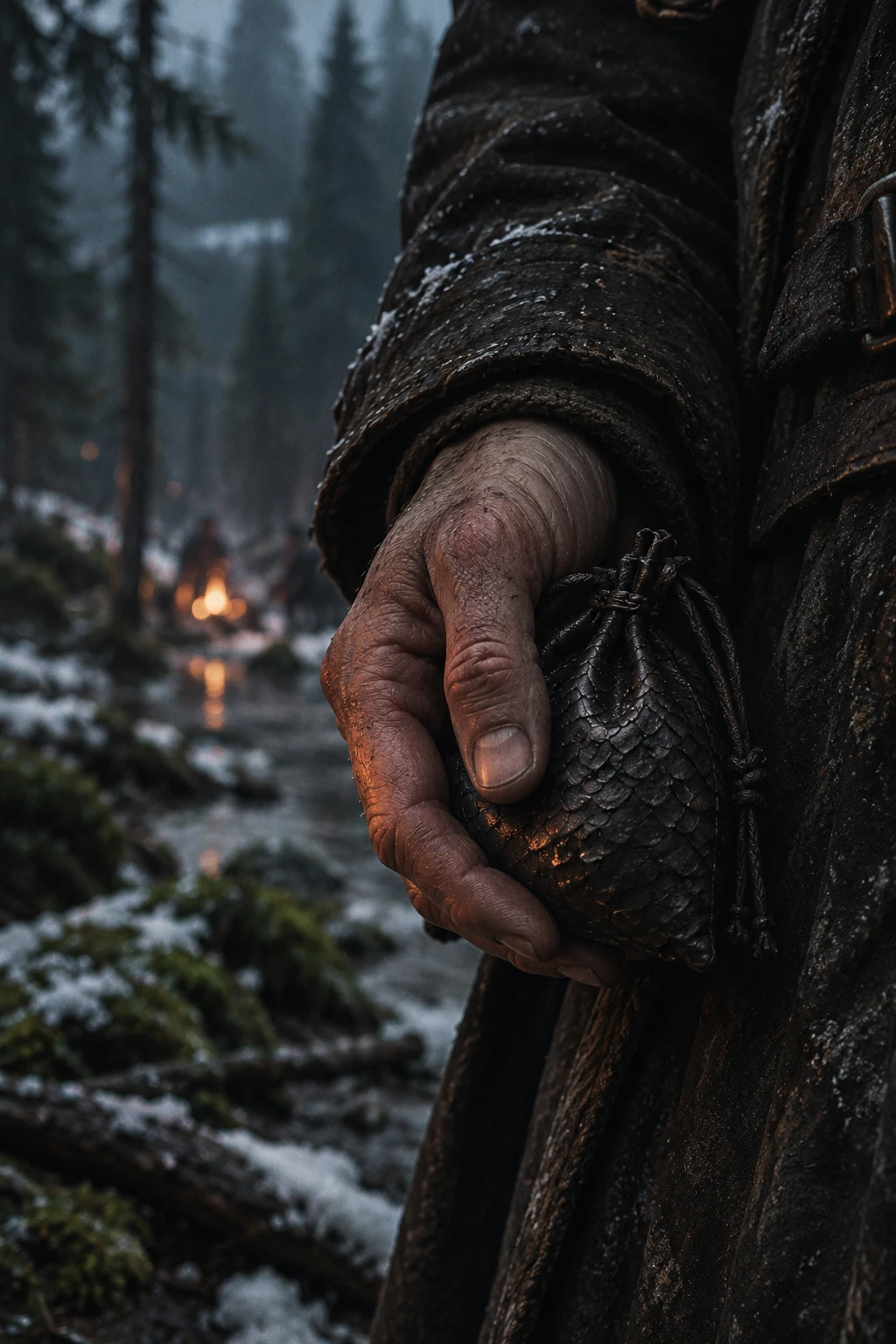
@nevsky_alexander
On Instagram: Dubai beyond the postcard — family, the city, discoveries and life between projects. On Threads: thinking out loud about design and AI. On YouTube: videos that need more room than a story. Follow me wherever you feel at home, and let’s keep in touch