
As always at this time, at the very beginning of those spring days so troubling to the soul, the staff of our House of Pioneers (mostly women, naturally) begin to be battered by savage magnetic storms, vitamin-deficiency cyclones, tsunamis of the nerves and tempests of half-starvation diets, picked up in half-grasped bits and pieces from magazines of glossy foreign lands… What are your notorious Bermuda Triangle or some Shambhala nobody knows where beside this?! Here everything is serious: a dress for a daughter’s school-leaving party, a last-minute sanatorium voucher, an aunt in Makhachkala, prices at the cooperative dumpling café, lovers in white Zhigulis, the approaching recitation contest, oh, girls, the mohair they put on sale yesterday… Whitewashing and flat repairs, here’s a new joke, have you heard… A visiting psychic, French cosmetics, the endless television serial, advance-payday, a commission from the city education department…—all this is the pulse of our time, in unison with which the heart of the purposeful House-of-Pioneers organism beats, now deceptively slowly, now in frantic fits.
And I say to myself: all right, it’s time to put an end to this, gradually withdrawing from the seething life there, finishing things or putting them off until very much later indeed, until I become invisible and of absolutely no use to anyone, so that Ninel Iosifovna, our director, will sign my leave application without even looking at me. Then I shall wander, detached from people’s headlong affairs and faces, wander through the city with the unhurried gait of spring’s carefree accomplice.
But long time will prompt me—it is time, gently nudging me with the melancholy of streets turning blue, with the watercolour veil of the trees’ nascent green breathing, time… Perhaps a watch will fall from careless hands, or my neighbour, an old air force colonel who caught fire back in the skies over Spain in thirty-nine, will spend the whole night playing crackling Argentine tango records from a collection amassed over a lifetime, or some chance taxi driver will take you, for no understandable reason, to the house where the dearest and happiest of women lived, your first love (don’t even think of going into that entrance and asking. Undoubtedly an untidy fat man in an undershirt is now cooking his eternal carrot soup there…) Who knows what secret signs may tell you—the time has come…
I shall begin closer to the setting sun, so that the troubled fire of the burnt-out day may kindle her body like a beacon fire, to the incandescence of leafy copper-red, raspberry, then scarlet… Her body—well-shaped, clean and slender, like a freshly planed boat. Like this: pour into my palm the secret mixture that smells darkly of the midday haze of July pines, rub the honey-golden radiance with measured sunwise revolutions into the willow curve of her neck, the white-church temple of her shoulders, the glossy dusky hollow between two smoothly spellbound hills with brown coronets of nipples, into the flowing windings of her arms, into the lap gently descending towards the cherished forest edge, into the languorous smoothness of her hips traced from a divine pattern…
Like this: carry the secret, ancient oil to the very smallest cell, enveloping her whole body in the faintly bitter, tender aura of vanished centuries, drive the darkened blood, knead the brittle knots of stiffened little sinews. At this moment my hands are shot through to the very fingertips with a premonition of thunder; their electrical fullness streams forth a halo of light and strength, a fiery, life-giving warmth. As though they have long known how, my fingers weave the interlaced, forgotten cryptography of prophetic signs, and perhaps within them lies the answer to the inseparability of times—her body gives birth in response to a deep cello sound, barely audible at first, muted as the memory of blood and solemn as the humming of heat-fired pines.
When Chagir, the magic star, lights up, and the bloody fingers of sunset are executed by the guillotine of night’s black curtain, it will all be over, and an immeasurable weight will press down upon my soul, the dark poison of exhaustion will spread through my body—and only oblivious sleep, a soundless flight above the freezing starry canopy, will save me—will cool my heart and dry my tears.
She will come alive: the vague twilight of her eyes, the galloping black cavalry of her eyebrows, the wind-wings of her nose will tremble like leaves, like quivering river streams, her lips will curve into a nomad’s bow, the tar-black mane of her hair will toss!..
Some time will pass while we live in non-intersecting planes of time’s passage, finding our bearings and growing accustomed to each other anew, but I shall already be preparing for the journey to fetch the ancient colours (there is only ever enough for one use), there, into the deepest secluded murk of the northern forests, where my grandmother is sure to be waiting for me.
I shall darn my Belgian paratrooper’s jacket, thick and hard-wearing, proof against bullet and bayonet, the evil eye and any other curse, and pack walnuts, apples and little bottles of pomegranate extract into a plain little sack, hone the rather long knife of a Finnish crawling scout and spy, and puzzle over the worn sketches of the three-verst map, marking promising landmarks in my mind, while her renewed eyes, washed in the water of life, follow me without cease, until quiet caresses slowly set the nights alight…
But I shall already be far, far away, in a half-empty electric train pierced by the green arrows of the cheeky spring wind.
And what can I do if every year, before spring begins, my wife seems to die like this, sinking into a tormenting, unconscious oblivion? What could I do, wearing out the doorsteps of the capital’s luminaries of medical science, crumpling and throwing away glossy medicine wrappers and colourful foreign labels? What could I do, dying with her each time, beating in dull, stony silence against the gloom of a soundless mist in which light and colours and sounds faded with her mysterious, inexplicable departure?.. For all the hearts that turned towards me, and mine as well, were deaf, closed to the irreversible rustle of time crumbling away, to genuine kindness and love. And only by setting my heart in the right direction, strengthening my faith, living through and melting myself down to the primal essence of compassion, becoming mired in the rough work of the soul, did I bring forth pure joy, the sole necessity of my existence. Swimming in the radiant ocean of love, understanding all its boundlessness and grandeur, to choose the right path, surrender to the true current, merge and dissolve in it, demanding neither thorns nor glory in return—this is the necessary work of heart and conscience. This is the secret of unfading youth, the secret of painting with ancient colours.
Thus I shall walk, thinking long through the forests, treading out my path like a crane, as a year ago, as before, into my native country (only why did I leave it so long ago?). Here and there in the hollows doomed snow still stretches in whitish fibres, moss-lichen curls up briskly, the fragrant stickiness of buds gathers strength in bushes and trees. In trunks and branches—in roots and stems—the hum and shiver of approaching blossom, the many-coloured dream of a fruitful, brief season. Silence streams, rings with the cavalry of a distant brook, calls back and forth with the ascension of birds’ voices. Long-drawn, stretched-out time has covered the fiery country with its magic wing, all the twilight ravines and thickets, the clearings where rolling little sparks of last year’s lingonberries will gleam in the brown gloss of moss…
The first imperialist war rolled through here in a burning wave, and every now and again you stumble upon the syphilitic hollows of trenches, the cobweb rust of barbed wire, dugouts with rotten, collapsed roofs, or little white pencils of bone and a rifle barrel charred by rust crunch beneath your foot. A ghastly reality chilled my heart, smoothed the hair on the back of my head with a sliver of ice, a nightmare from a foreign video: once, on a noisy, stormy night, as though softly tinkling, or chuckling like a New Year’s ornament wavering in the cast of moonlight, a parachutist’s skeleton hung in a pine, tangled in its lines, wearing the rotted shreds of its equipment. There was this too: in an especially bitter winter (no one could remember another like it), the bog sank deep down, leaving a succession of wax figures in gas masks exposed: a platoon driven mad by gas had drowned standing upright, preserving its final stepping movement and the uniform of a Russian infantry regiment in the incorruptible eternity of a peat sarcophagus.
But in a long fall I rush through the bicycle flicker of ringing birch spokes, the crumpled pink dress of wild rosemary, the humming of heat-fired pines, the chime of brooks. I spend the nights in musty, stupefying stacks of last year’s hay at the crossroads of grassy tracks, and by a smoky little fire I keep cooking myself porridge from wheat concentrates in an imperialist soldier’s helmet, and sipping thin tea from a tin, seasoned with the unforgettable pomegranate extract.
At night it is icy, starry, fiery… The landscape looks more and more lunar, the clearings grow stonier, the tree trunks more gnarled and grasping, the sky lower and flatter. The camps begin too: rows of the same old barbed wire, charred remains of barracks flooded with the pinkish blood of fireweed, the leaning Gulliverish freaks of watchtowers. Somewhere there is also a dreadful gravel quarry, where someone has brought HIM from all over the surrounding country and carefully hidden HIM in one of the galleries, in fourteen plaster copies with flaking bronze paint, still in the same military tunic and boots, pointing the way for the peoples. Once they wrapped him snugly in camp-issue padded jackets, until some time or other, but the rags rotted away. And everywhere bones, bones, bones… By now you will have worn your feet raw and worn down the heel of an American Lend-Lease boot, cursed the three-verst map, and God, and the devil, and some immeasurable, feral, cosmic cold will creep towards your heart; any moment it will rush in as into a depressurised interstellar ship! And the forests grow gloomier and denser, impassably clutching at my paratrooper’s jacket—but where is my grandmother waiting, shall I find her this time?.. Yes, beside the piercingly blue ice-sliver of a lake, where a little mountain river twists like a cord as it runs into it, on a rise, beneath the outspread wings of an age-old spruce, her little hut has hidden itself away, warm and ragged as a padded jacket.
Grandmother wrinkles the dried-out crust of her face, narrows her little eyes as blue as this lake, smiles a frog’s smile, rubs her dry little spider’s paws, tanned by time. She is still wearing the same Martian chain mail that nourishes her body, which by now is apparently grass-like.
“How are the Martians, Grandmother?” I crumble the remains of biscuits and the sticky slush of sweets I had meant to bring as a kind gift onto a piece of coarse linen.
“Oh, them,” the old woman chuckles, “you can count on them, flew in the other day…”
“And what are they like, won’t you tell me?” I draw out my questions and my tea, and eat those sweets myself. Peacefully I light a dampish cigarette.
“What are they like? Ordinary folk, dearie, ordinary…”
“But what sort of ordinary folk?”
Grandmother busies herself beside the little fire, scatters the black, fragrant dryness of some unknown little mushrooms, roots and berries into the small pot that has come to the boil again. She pushes a birch-bark container of crimson-red lingonberries towards me, the golden smokiness of a fish’s tail.
“What are they like, you say?” She takes her time answering, or will she never say? Keeps bestowing tempting food on me. “Oh, they’re ever so tender-hearted, always fretting over you wild things. Even an old woman like me, they left me here to keep an eye on you. They flew in that time, way over there, beyond the little wood, why, it was the very end of the world… Their head one came by, kept lamenting, bless his heart: these explosions, he says, nuclear ones going bang, they’ve raped all of mother earth. And that hole in the o-zone… keeps stretchin’, he says, like somebody’s burnt a hole in a little kerchief… But how’s anyone to help you? Your little minds are so very drab, haven’t grown up yet… just so long as it don’t lead to terrible trouble.”
“So there won’t be a war, will there, Grandmother?” I ask, while my gaze reaches towards the jagged little saw of the black spruce mountains, towards the grey tin of the sky, towards the little blue sabre of glacial water… I linger, linger before hearing the answer, still unable to believe that this is so, yes, that all this is real.
“Well, what can I tell you, son,” the old woman’s face darkens still further, “nobody knows… and those that know—they’re not allowed to say…”
“What else, Grandmother?” I want to keep the timid little fire of our conversation going.
“Well, a monk came, a man of God, from Tibet, we talked and talked, things aren’t peaceful there either, he took some thought seedlings and went on his way with God.”
“Have you grown new thoughts, then?”
“Well, let’s go and see…”
She hobbles ahead, rocked by the wind like a blade of grass. There, behind the little house, beyond the trunk of the wide-branched spruce, is a small plantation. Grandmother removes the covering mat, and I see thoughts: large ones and smaller ones, of various colours, but not bright, mostly pale and inconspicuous. They sway, looking something like water lilies, or perhaps like wondrous orchids, but on longer, harder stems, with double petals trembling at the edges. They call back and forth as though alive, fret over something, and seem to hum as they talk to one another.
“Grandmother, is there a thought about war here?” I ask, while I linger, linger again before hearing the answer.
“Of course, here it is…” Grandmother points to a rather small, inconspicuous, bluish little flower. I look at it with a strange feeling of disbelief, fear and curiosity: so this is what it is like!
“Couldn’t we pull it out?”
“No, no, God be with you, you can’t just pull anything out,” the old woman murmurs hurriedly, “if it passes away, it’ll do so of itself, but pull it out, how could you, it’s a sin… and there’s no knowing, no knowing…”
“And is there a thought about love? Show me, Grandmother!..”
The thought about love is larger, pale pink, swaying on a slender stem. How defenceless it is, how fragile!
“I’ve grown a bigger one too,” as though she knows what I am thinking. And I see a larger thought about love too; probably this is a thought about universal love.
I see other thoughts as well: about fear, about illnesses, about the grain harvest and other harvests, about children… and all of it is strange, uncertain and wavering beneath this flat, greying sky. My head spins.
I sit down beside her, loosen the earth, clear away the fallen litter, pluck dried-up ideas from good thoughts, bad ones, all sorts, in fact. The old woman chuckles: the thoughts are good enough, if only a few more deeds would come of them…
“All right, all right, that’s enough for now…” She tugs at my sleeve, carefully covers the thoughts with the mat, and we return to the clearing, to the smoking little fire. We sit in silence. I drink the cooled, faintly bitter, familiar tea of my unforgettable homeland… what roots did the wise old woman scatter into it? What has made my nose prickle so, and veiled my eyes—a veil or not a veil, is it smoke, or mist? Why does it hurt so to love this little grey sky, the little saw of spruce mountains, the ripples on the little lake? But did I love it before, did I remember? How inseparably all of it is mine, to the death, to the blood, how long I spent remembering it, and now it has found its way to my heart, returned, scorched me…
“And how’s that sweetheart of yours, still slipping away?” From far away Grandmother brings me back, starts a conversation, revives the little fire.
“Yes, Grandmother, every spring she still seems to die, falls into this sleep, and everything in her stops… Only your ancient paint helps, I rub it in, rub it in, and she comes alive, and keeps growing younger, and more beautiful. That’s another thing I came to ask, whether you have any of that love potion?”
“Why, of course. Yes, yes, why wouldn’t I, seeing you’ve come? Here, take it with you. It’s all right, son, her wandering through times, going back to her own time, whether backwards or forwards, there’s no knowing… Seems you never had the chance to meet before. Anyone who dies young, without living to old age, goes back to their own time, seems they weren’t meant to appear here… But you didn’t let her die, seems you’ve got a light hand, it leads, a knowful hand, then… Now you must care for her. Some people walk under the moon, some under God, and some under the times, it’s all right, let her be… Don’t keep troubling her for nothing. Do it all on the seventh day, at sunset.”
“That’s what I do, Grandmother.”
“See that there’s no gusty wind, from east or west, better a steady one, northerly… Here’s your potion, I got crushed skull for it from a man hanged where three roads meet, a lizard’s tail and a fish’s eye, a window’s creak and a rat’s rustle, bitter rowan blossom and wormwood milk, a wolf’s howl and smell, and a neigh from a horse’s hoof, and powder from a buried Mauser—there’s plenty more in it, son, take it… Save and preserve, the Lord be with you… amen.”
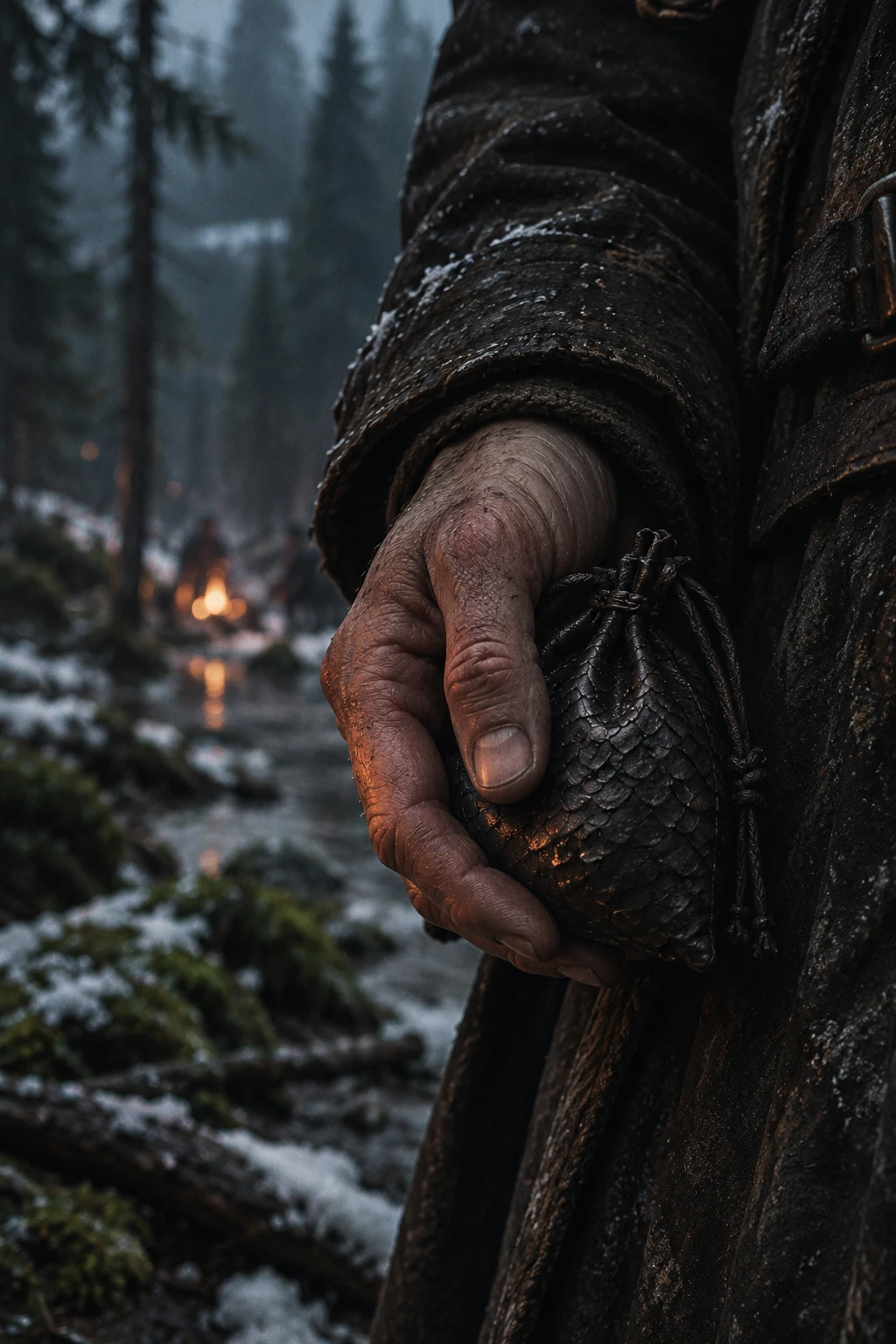
I take the black pouch, seemingly sewn from fish scales, and hide it against my chest. I know the sunset will burn itself out, night will crash down in an icy, starry canopy, and on a grey, gloomy morning, prickly as an imperialist soldier’s greatcoat, Grandmother will see me back along the cherished little path. And that path will reach all the way to my heart, to all the people I shall meet and never meet, those I shall know and those I shall not. But Grandmother’s kindness and care will reach them all, her wisdom, the light and sadness of her thoughts. I shall walk for a long time on my way back, calling out in the flying temples of birch groves, remembering, thinking, believing that everything will be according to her, Grandmother’s, precepts, because that is how it has been since time began—what the old people conceive, that is what will be.
@nevsky_alexander
On Instagram: Dubai beyond the postcard — family, the city, discoveries and life between projects. On Threads: thinking out loud about design and AI. On YouTube: videos that need more room than a story. Follow me wherever you feel at home, and let’s keep in touch