

For Modern Medicine, I worked on a website in three languages where the clinic can prepare the next revision while keeping the approved version available to patients. Here, design is tied to how services, specialist pages and articles are published.
For Modern Medicine in Dubai, I worked on a website that connects visual presentation with a controlled editorial process. English, Russian and Arabic versions, the clinic’s real material, service areas, specialists and journal pages need to be maintained as a system, rather than a set of attractive screens built once.
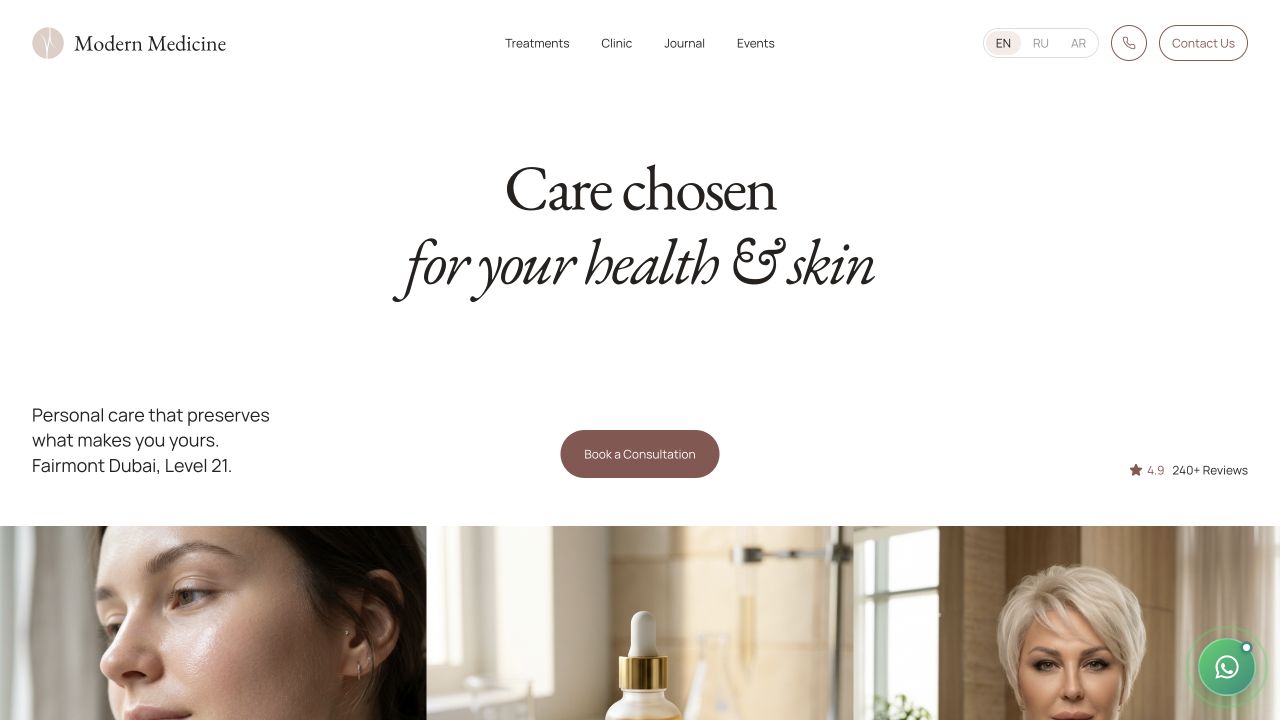
The “Modern Medicine — first screen” view preserves the project’s real material and design.
Modern Medicine — first screen
Archived interface · demo data
An editor can save unfinished work
The current architecture uses Astro with server-side rendering and EmDash. Content is stored in D1 and media in R2. React is used for individual interactive elements, such as the enquiry flow.
The public page uses the published revision. An editor can work on the next one without changing the text in front of the visitor. Application behaviour must demonstrate this distinction: save a draft, open the public page and see the previously approved material.
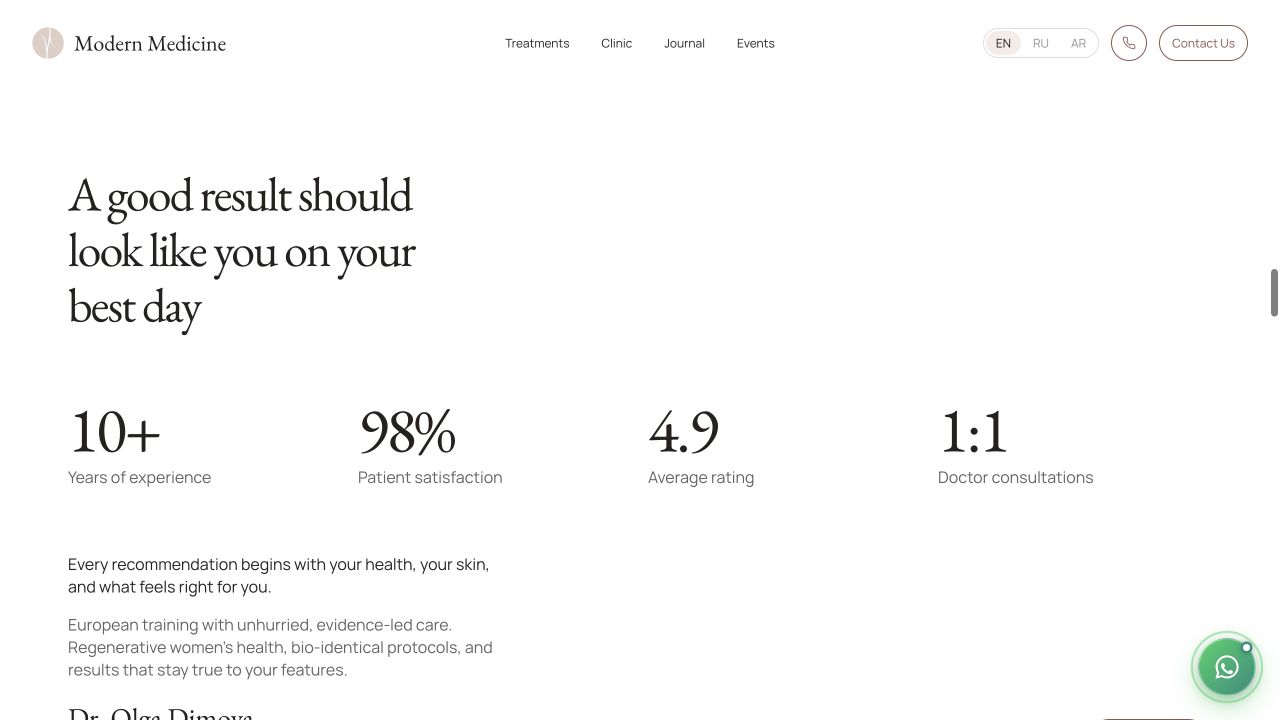
The “Modern Medicine — internal section” view preserves the project’s real material and design.
Modern Medicine — internal section
Archived interface · demo data
That is why not every CMS record can be treated as ready to serve. The system needs answers to which version is published, which language is selected and what happens when a translation is not ready yet.
Where design meets content
Arabic text needs its own typography and direction checks. Russian needs room for longer wording. Photographs must remain real project material; generating another impeccably smiling doctor does not solve the task of presenting the actual team.
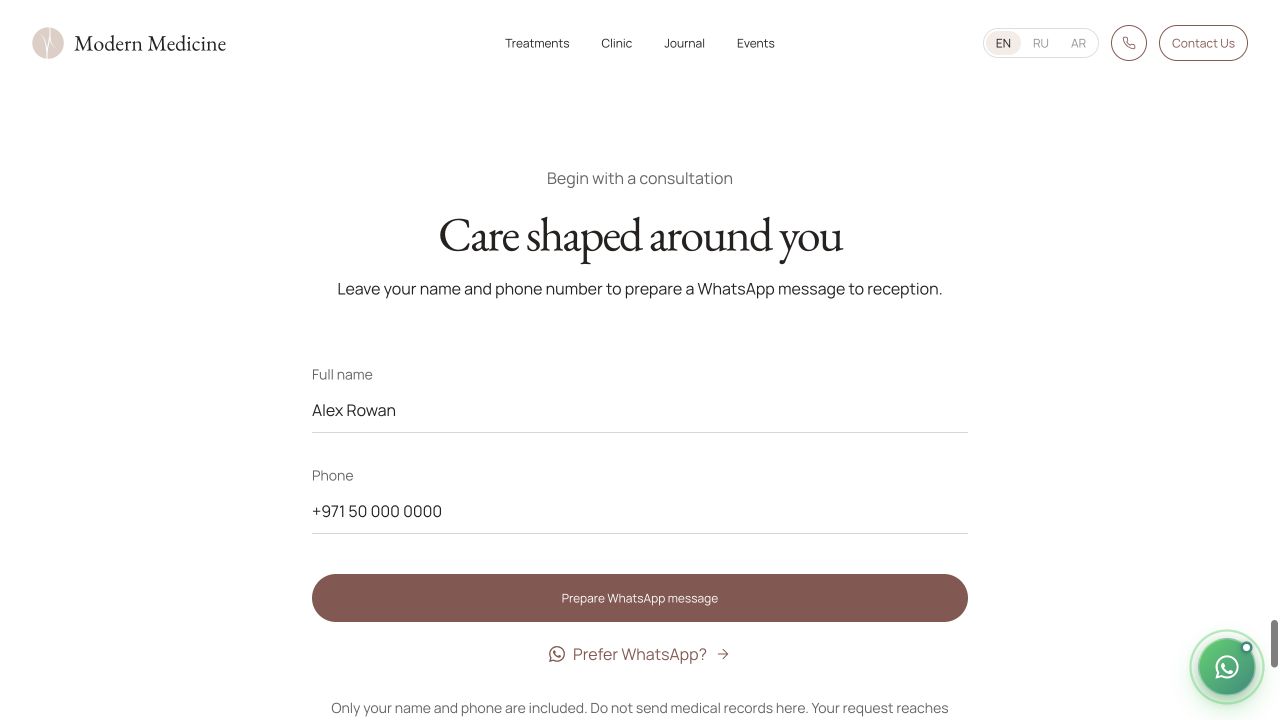
Modern Medicine — contact section
Archived interface · demo data
AI helps assemble the interface and check recurring states. Medical information requires an approved source: building a website does not authorise me to invent the effectiveness of procedures, specialists’ qualifications or promises to patients.
There is also a small technical point worth spelling out: noindex directs search engines, but does not password-protect a page. Restricting indexing is not privacy. Content that truly needs to be private requires a different mechanism.
The main workflow is to prepare an edit, check it in the required language and only then publish it. I show how the website and editorial process work; information about specialists and services must come from the clinic’s materials. Design and development do not replace approval of medical content.
Related stories: The psychologist’s website · The F&I Studio website.

@nevsky_alexander
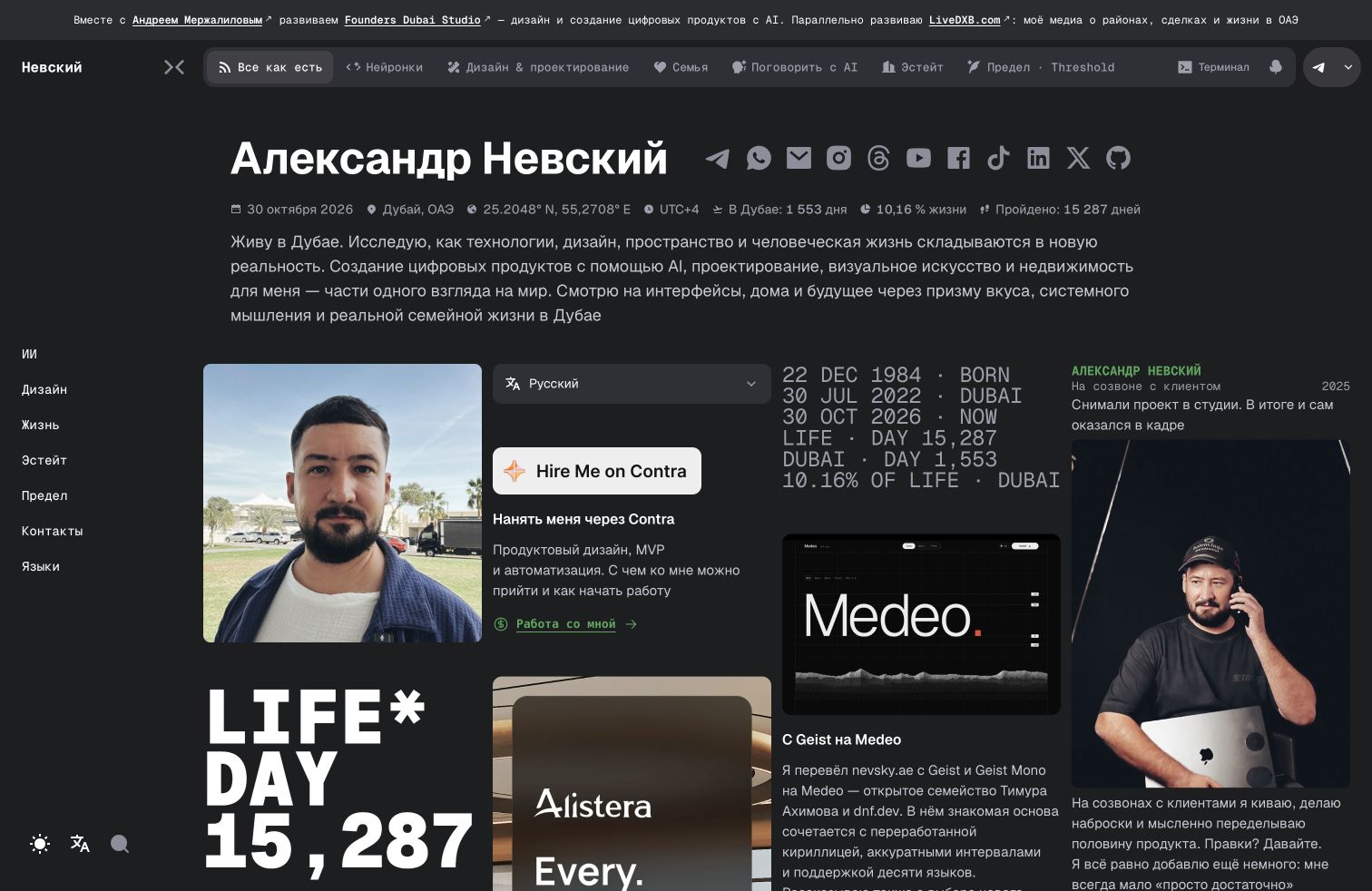
On Instagram: Dubai beyond the postcard — family, the city, discoveries and life between projects. On Threads: thinking out loud about design and AI. On YouTube: videos that need more room than a story. Follow me wherever you feel at home, and let’s keep in touch