
Ask a language model to build an investment company’s website. Soon you will have billions under management, decades of experience and a photograph of people confidently looking at a glass building. Sometimes the company has not yet supplied any of that information.
For Kingsmont, the task was to present the business convincingly using real material. It needed structure, visual discipline and a working page, not a corporate biography generator.
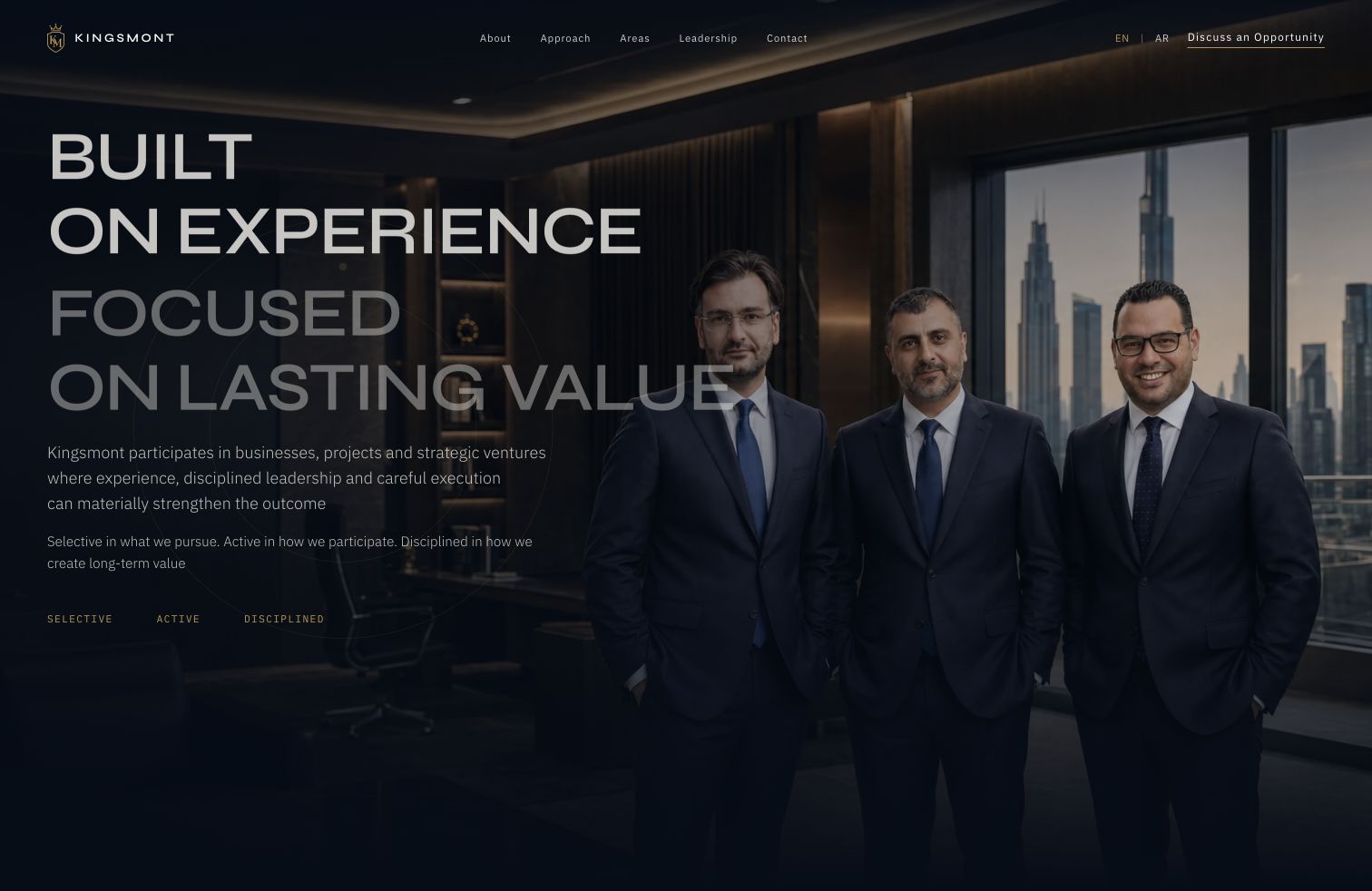
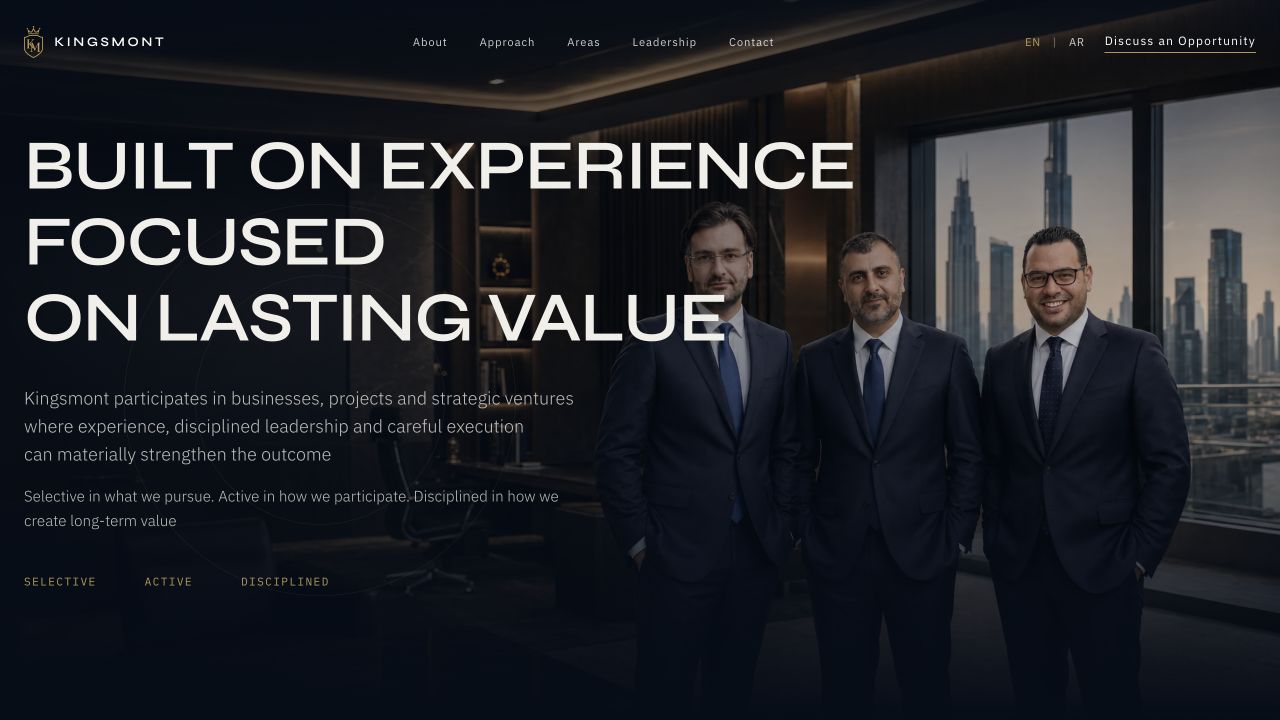
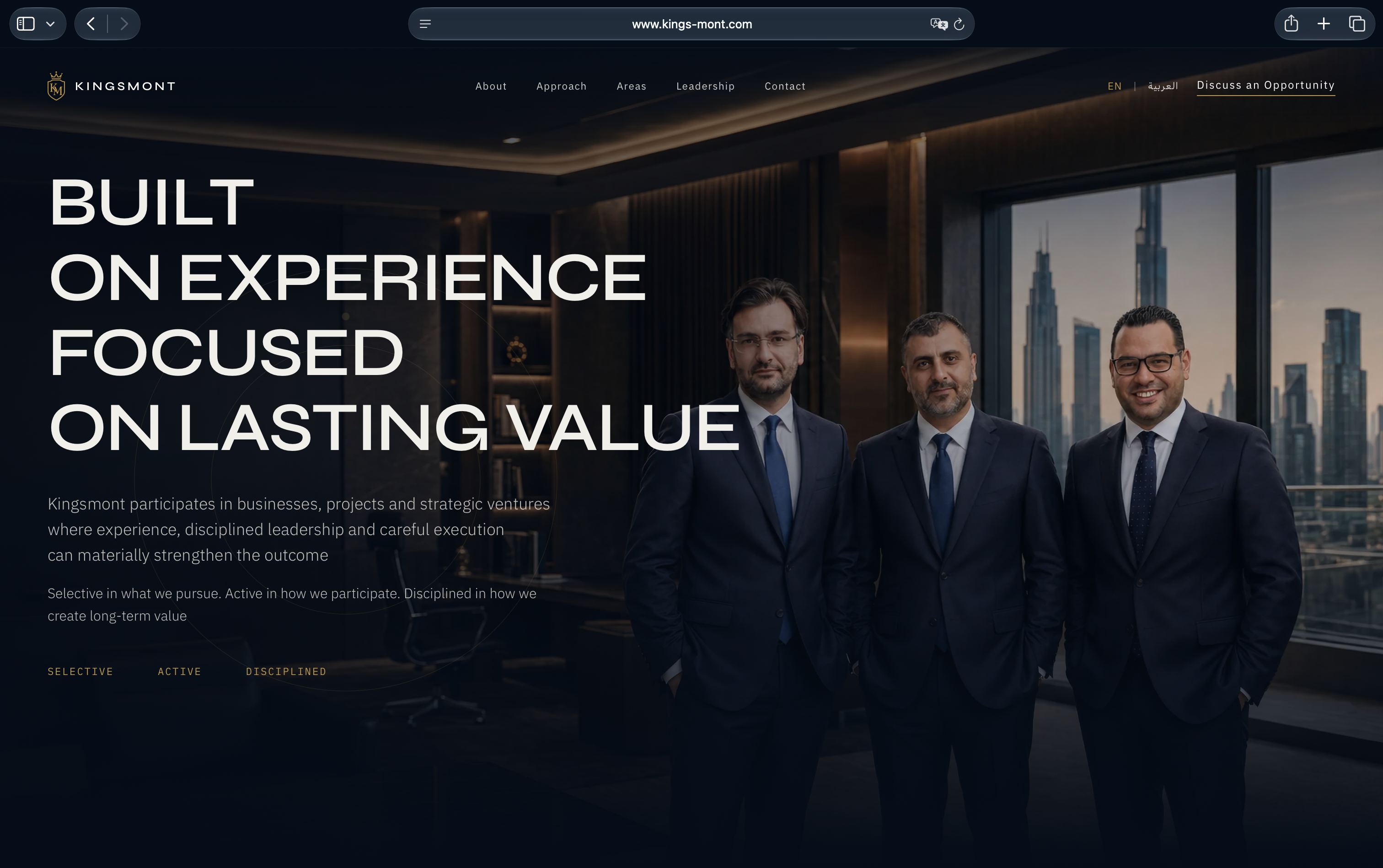
The “Kingsmont — first screen” view preserves the project’s real material and design.
Kingsmont — first screen
Archived interface · demo data
Fast hands, slow decisions
Cursor and Codex were used in development. They can handle components, responsive states, repeated edits and implementation checks. But who the company is, what it does and which claims it may publish are inputs to the work, not empty spaces in a mock-up.
The site uses Astro and TypeScript with static delivery and Tailwind styling. Motion in the first version used CSS and IntersectionObserver: the browser reports a block entering the viewport, then the appropriate state is applied. No large animation engine was needed.
I am interested in proportion here. On an institutional website, impact often comes from a pause, the scale of a heading or the space between elements. Animate every line and it starts to resemble a company desperate to impress immediately, unsure it will get a second minute.
What remains human work
Choose a fact. Reject an unsupported figure. Notice a paragraph that sounds solid but says nothing. Maintain equal quality on the contact page and first screen. Faster component writing does not remove these decisions.
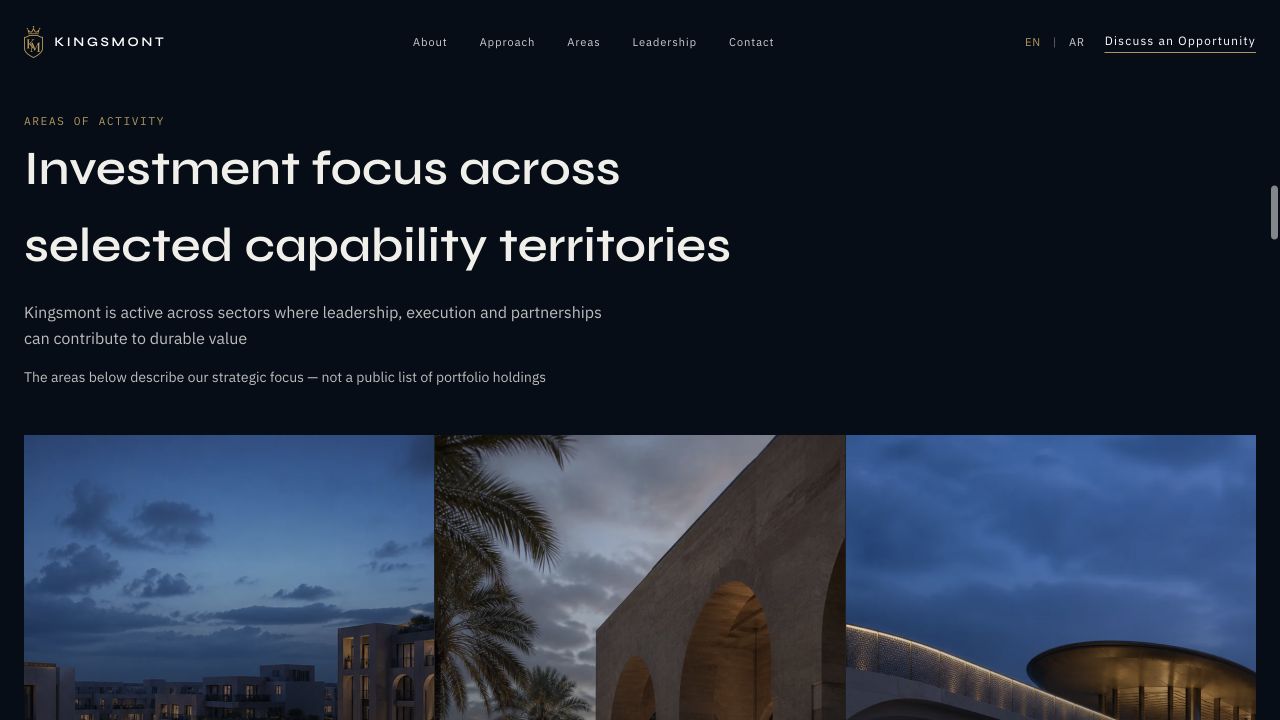
The “Kingsmont — internal section” view preserves the project’s real material and design.
Kingsmont — internal section
Archived interface · demo data
The published site can be opened and viewed. Its existence does not establish increased investor trust or more enquiries; those need separate measurement. I show the development result and how it was achieved.
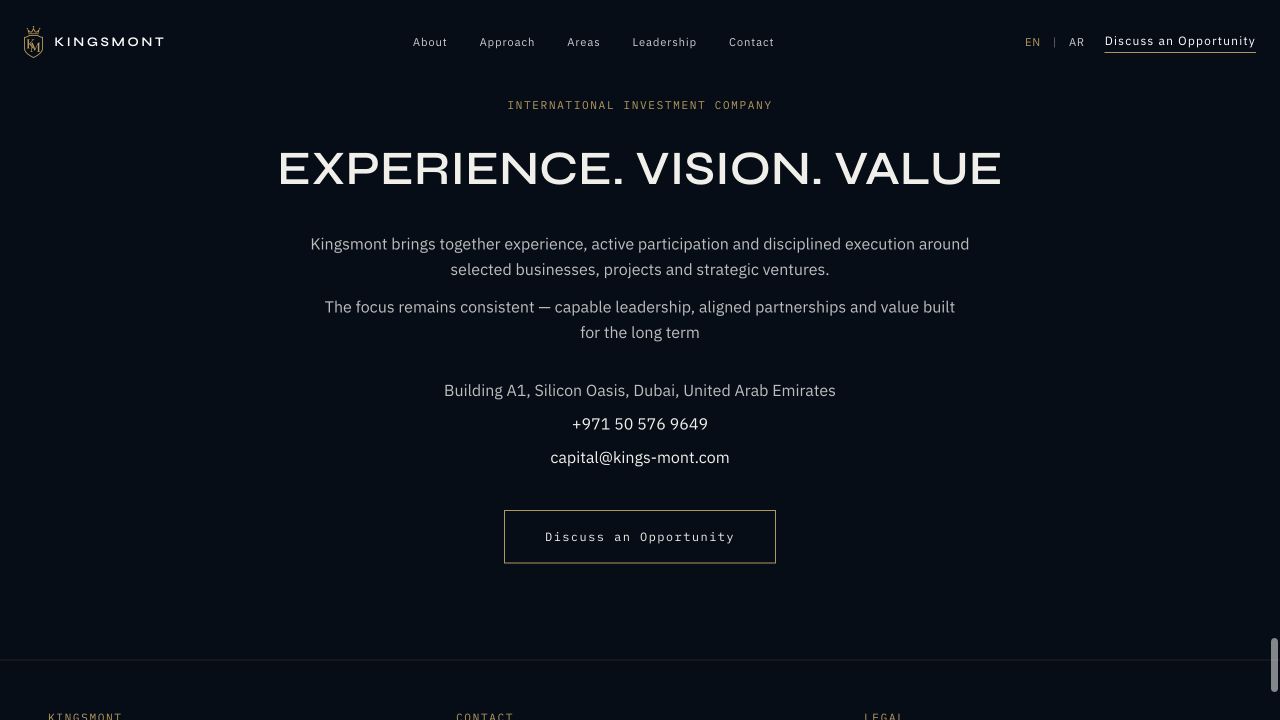
Kingsmont — contact section
Archived interface · demo data
For Kingsmont I delegated components and responsive states to agents. Structure, material and visual presentation remained mine. Faster coding was useful; deciding what the company should say about itself still had to come first.
The next stage: Antigravity and Gemini
Cursor and Codex formed one stage of Kingsmont. Later I designed and built a new version in Google Antigravity with Gemini. By my estimate, that later stage took less than a working day. That is not the duration of the whole project: company material and real business information remained the inputs.
I called the visual direction Quiet Institutional Power: a dark palette, restraint, large typography and carefully organised information. The repository relied on corporate material. Portfolio companies, investment figures and other unsupported claims were not added to the copy.
I created the new images with AI and set their visual direction myself. In the leadership section I kept real photographs of the people and generated the office surroundings. These are composite images, not documentary photographs of the team in those rooms.
This version added a custom Three.js WebGL globe, Zod validation of structured JSON and Sharp image processing to Astro, TypeScript and Tailwind. Headings use Syne, body copy and the interface IBM Plex Sans, and utility labels IBM Plex Mono. Design tokens kept sizes, spacing and typography consistent while working with agents.
Simple animation stayed with CSS and Intersection Observer; I did not include Framer Motion or GSAP in the first version. The repository had separate checks for leadership information, public claims and the contact form. Successful compilation is not enough for those tasks.
For me, this stage brought together research, structure, visual language, images, interface, development and verification. The transitions became shorter; responsibility for the content stayed the same.
I distinguish two stages and their tools in Kingsmont’s story. The version built in less than a working day belongs to the later Antigravity and Gemini stage, not the whole project. The original screens and composite AI images shown also need to be tied to their respective versions.
Project screens and recordings
Related stories: Horizon · Connection.me and RTL.

@nevsky_alexander
On Instagram: Dubai beyond the postcard — family, the city, discoveries and life between projects. On Threads: thinking out loud about design and AI. On YouTube: videos that need more room than a story. Follow me wherever you feel at home, and let’s keep in touch