
I started Nevsky OS as a system for personal and family workflows: storing information, finding it and returning to the next action. Different parts of the family have different data and permissions; bringing everything into one chat was not enough.
I am developing Nevsky OS around tasks, family finances, personal records and separate learning scenarios. The web interface uses React; data and APIs use Cloudflare. Conversational assistants connect to specific operations, rather than receiving universal authority over the whole household.
Memory needs an address
If an expense exists only in an assistant’s message, the next conversation may not see it. If a task exists only in someone’s head, the calendar is under no obligation to guess it either. A record therefore needs to reach its own data section, have a state and be accessible through a defined interface.
AI is useful here as a way to address the system: explain in ordinary words what happened or what needs doing. But a financial record must not change because of a new interpretation of an old conversation. And a wish to “practise reading” does not yet become a report of a completed lesson.
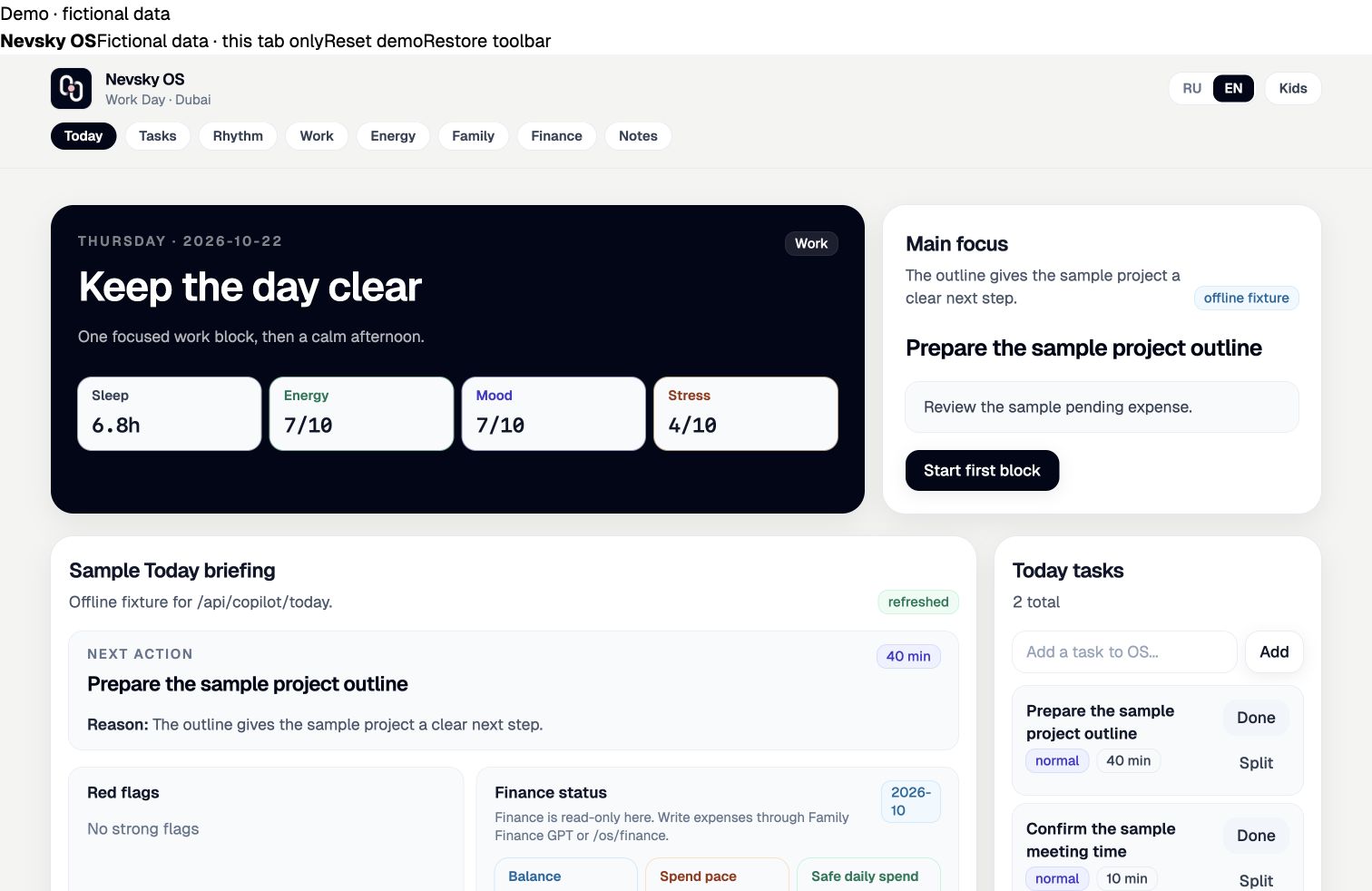
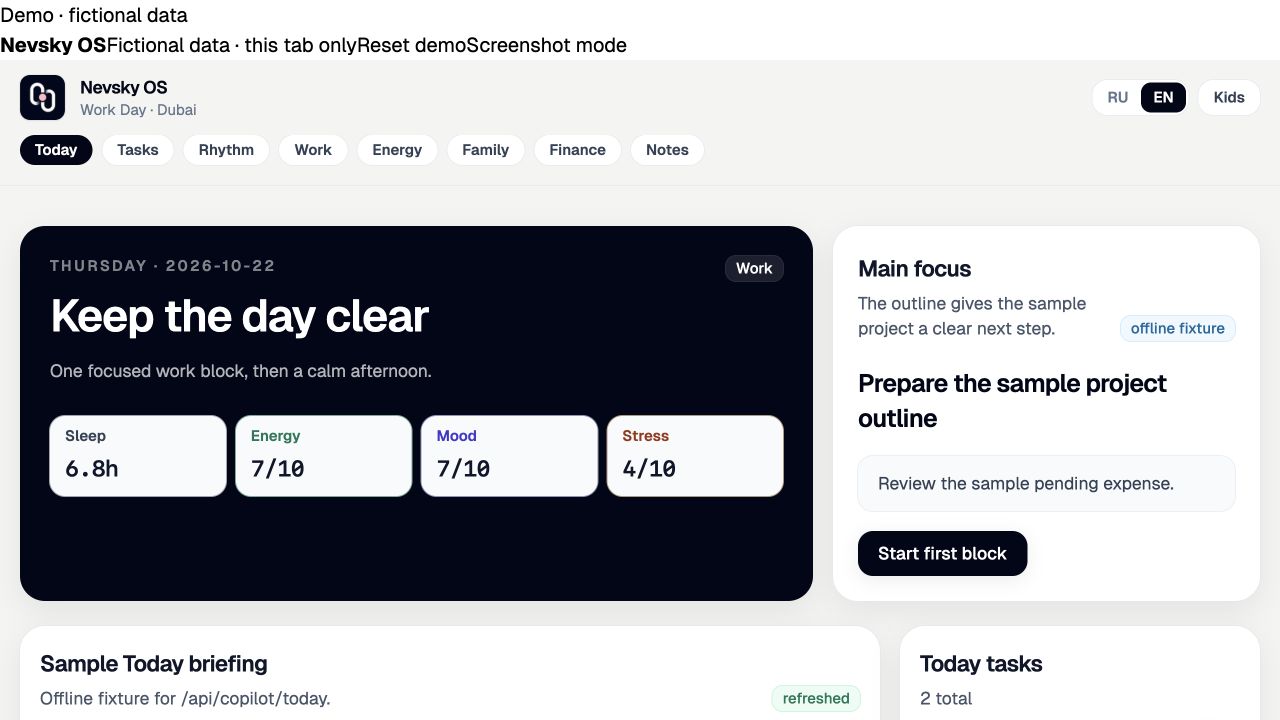
Below is an archived Today screen in Nevsky OS with fictional data. It shows one entry point into everyday tasks without revealing my family’s personal records.
Today screen
Archived interface · demo data
The family assistant has no all-access pass
A child’s reading scenario and an adult’s interface need different permissions. The project separates them: an assistant for a particular lesson must not automatically gain access to the family archive or administrative functions.
Some parts are implemented; others still need testing with people in the real process. This is especially true of learning interactions: a working API response does not tell you whether a child understands it, enjoys it or can comfortably continue.
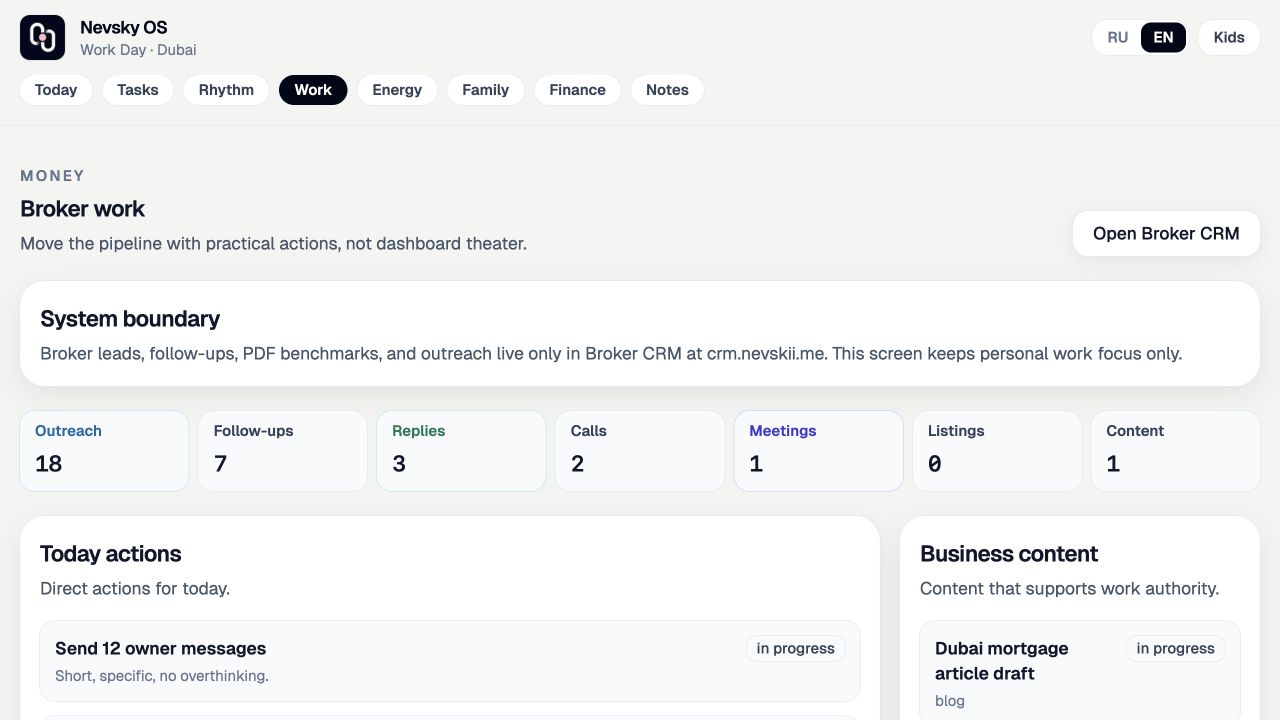
The second screen opens Work in the same demonstration system. You can explore the navigation and available changes to local state.
Workspace
Archived interface · demo data
I do not publish family records in a demonstration case. It is possible to explain the architecture without turning relatives’ private lives into material for selling development work.
This article shows the web interface using demonstration data. It does not stand in for a separate native application or reveal family records. For me, the system’s usefulness is measured by a specific action: whether I managed to record, find and continue the task I needed.
Related stories: Source and Operator · Letterstep and family documents.

@nevsky_alexander
On Instagram: Dubai beyond the postcard — family, the city, discoveries and life between projects. On Threads: thinking out loud about design and AI. On YouTube: videos that need more room than a story. Follow me wherever you feel at home, and let’s keep in touch